




Special Collections:
Our Youth Speak Up

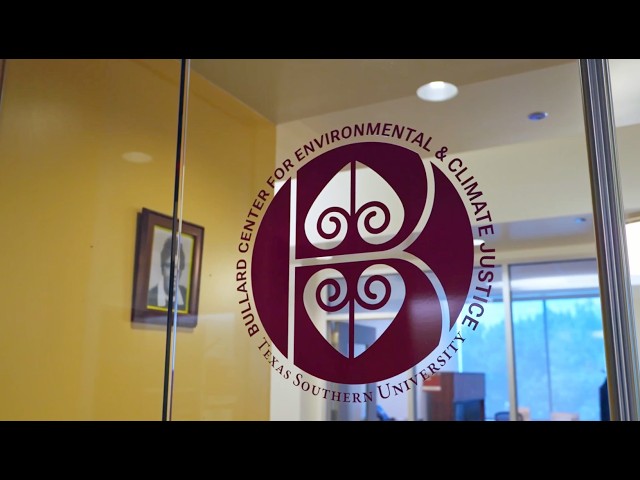
This documentary chronicles the life and legacy of Dr. Robert Bullard, widely recognized as the "father of environmental justice."
It explores his pivotal advocacy and the decades of work culminating in the Bullard Center for Environmental and Climate Justice at Texas Southern University.

This ITU Future Innovators podcast celebrates the 15th International Girls in ICT Day, focusing on 'AI for Development: Girls Shaping the Digital Future'. Host Ellen Taylor interviews Malkia John, a Kenyan engineer and ITU160 Gender Champion.
Malkia shares her inspiring journey, founding Sauti Salama—an AI and digital platform combating gender-based violence in Kenya. The episode highlights how engineering and social advocacy merge for a safer digital future, demonstrating AI's potential for social good and the importance of local experiences.
Listen on Spotify, Apple, or Soundcloud. Explore ITU's gender equality work and Equals in Tech.

Plastic pollutants are pervasive, found from the deep sea to the Arctic ice pack. Researchers estimate that by 2050, oceans will contain more plastic—by weight—than fish. These degrading plastics leach toxic chemicals, posing a serious threat to marine life and humans.
Filmmaker Chris Hanson's short film highlights this issue, following 17 Hawaiian students as they study the impact of plastic pollution on their local beaches.

Teenager Madelaine Toomey's story, 'Plastics in Our Oceans,' was conceived.
It was formed during her sailing journey across the Atlantic Ocean.

For over two decades, the International Telecommunication Union (ITU), through its Telecommunication Development Bureau, has championed youth engagement in information and communication technologies (ICTs). Since 2001, the ITU has empowered young people globally, enabling them not only to access and use ICTs, but also to actively contribute to shaping an inclusive, sustainable, and forward-looking digital future.
Through dynamic activities, from regional forums to global summits, the ITU connects young leaders with policymakers. This collaboration allows youth to exchange ideas, influence ICT strategies, and help develop policies that truly reflect the needs and aspirations of the next generation in an increasingly digital world.
The ITU remains firmly committed to amplifying youth voices, strengthening their role as agents of change, and advancing a digital future that is accessible, inclusive, and empowering for all. Learn more: https://www.itu.int/itu-d/sites/digital-inclusion-youth/

This recap highlights the [Year] HBCU Climate Change Conference, an event that united participants from labs to legislative floors. We gathered to innovate, advocate, and lead the charge for environmental equity.
Discover the biggest moments, boldest ideas, and the voices shaping our tomorrow. Explore key discussions on climate justice and a green future. #2026HBCUCCC #HBCUClimate #ClimateJustice #GreenFuture

Day 4 of the 11th Annual HBCU Climate Change Conference was electric, showcasing the movement's excellence. Lt. Gen. Russel Honoré's strategic brilliance and innovative student research underscored a strong foundation for climate action.
HBCUs are actively designing the future, not just discussing it. This day highlighted resilience, groundbreaking research, and the rising legacy of these institutions in advancing climate and environmental justice. #HBCUCCC2026 #LegacyRising #ClimateJustice #EnvironmentalJustice

The #HBCUCCC2026 conference moved from discussion to action. Dr. Calvin Mackie presented on STEM NOLA, while Pastor Williams highlighted the critical reality of flooding in Shiloh, emphasizing the urgency of our work. A powerful panel of TSU students demonstrated how the next generation is actively building the future.
Our efforts bridge STEM, storytelling, and climate justice, driving tangible solutions for environmental equity.

Day 2 of the 11th Annual HBCU Climate Change Conference focused on empowering the next generation of leaders. The day's events included awarding the Damu Smith Award to Donnelle Wilkins, Founder & CEO of the Green Door Initiative.
Attendees also participated in inspiring panel discussions, highlighting critical themes of environmental and climate justice.

Day 1 in New Orleans brought together students, faculty, and community leaders to bridge the gap between climate research and real-world action. These initial sessions highlighted the critical connection between climate justice and the fight for racial and economic equity.
This collaborative effort, spearheaded by the Bullard Center and DSCEJ, underscores a commitment to climate resilience, particularly within HBCU communities.

Day 1 in New Orleans, LA, convened students, faculty, and community leaders to bridge climate research with real-world action. Sessions underscored the inseparable link between climate justice and the fight for racial and economic equity.
Key themes included climate resilience and the vital role of HBCUs.
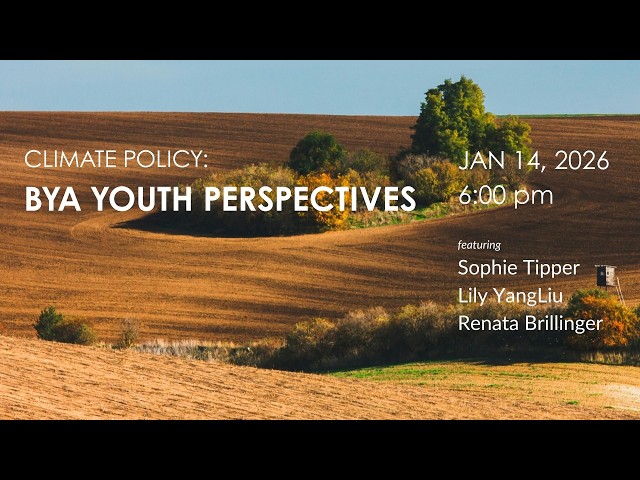
On January 14, 2026, the New Leaders Initiative hosted a virtual panel featuring 2025 BYA alums Lily YangLiu and Sophie Tipper. YangLiu discussed using climate education to promote youth participation in political and environmental decision-making. Tipper focused on policymaking and passing environmental justice legislation in Colorado.
The conversation was facilitated by Renata Brillinger, Director of the California Climate and Agriculture Network (CALCAN), a project of Earth Island.

On January 29, 2026, the New Leaders Initiative hosted a virtual panel featuring 2025 BYA alums Inaam Chattha and Kyle Trefny. Chattha discussed establishing a safe space for youth experiencing climate anxiety.
Trefny shared his journey from fearing fire to adapting and coexisting with it as a firefighter. The conversation was facilitated by BYA alum Jess Rimington, founder of One World Youth.

A comprehensive report from the Bullard Center for Environmental and Climate Justice at Texas Southern University, titled "Green Light to Pollute in Texas," analyzes 89 new or expanding petrochemical facilities across five regions of the state.
The study reveals stark findings: 9 out of 10 facilities are planned in counties with higher concentrations of people of color and families in poverty. Nearly half are in neighborhoods ranked among the worst 10% nationally for toxic air releases. Furthermore, 93% sit near other high-risk chemical plants, compounding threats of explosions, leaks, and chronic disease. Residents in an accompanying documentary detail how this industrial expansion has altered their communities.

"Green Light to Pollute in Texas," a report by the Bullard Center for Environmental and Climate Justice at Texas Southern University, reveals that proposed petrochemical facilities disproportionately target vulnerable communities. The study analyzed 89 new or expanding plants across five regions.
Findings are stark: most facilities are planned in counties with higher concentrations of people of color and poverty, often among the worst 10% nationally for toxic air releases. These sites also sit near existing high-risk chemical plants, compounding threats of explosions, leaks, and chronic disease.
A documentary further details how residents' communities have been transformed by this industrial expansion.

The Bullard Center for Environmental and Climate Justice at Texas Southern University released "Green Light to Pollute in Texas," a report analyzing 89 new or expanding petrochemical facilities across five Texas regions.
The study reveals stark environmental justice concerns. Nine out of ten facilities are planned in counties with higher concentrations of people of color and families in poverty. Nearly half are in neighborhoods ranked among the worst 10% nationally for toxic air releases. Furthermore, 93% are near existing high-risk chemical plants, escalating threats of explosions, leaks, and chronic disease.
Residents detail the profound community impacts of this industrial expansion in an accompanying documentary.
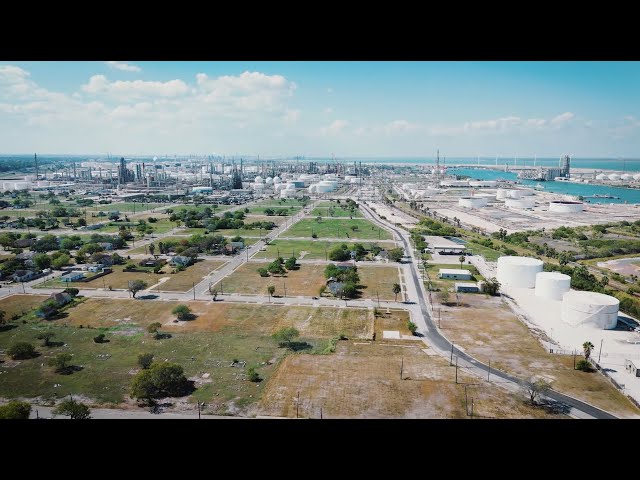
"Green Light to Pollute in Texas," a comprehensive report from the Bullard Center for Environmental and Climate Justice at Texas Southern University, analyzes 89 new or expanding petrochemical facilities across five Texas regions.
The study reveals stark findings: 9 out of 10 facilities are planned in counties with higher concentrations of people of color and families living in poverty. Nearly half are in neighborhoods ranked among the worst 10% nationally for toxic air releases. Furthermore, 93% are near other high-risk chemical plants, significantly compounding the threat of explosions, leaks, and chronic disease.
A related documentary features residents detailing how this industrial expansion has profoundly altered the fabric of their communities.
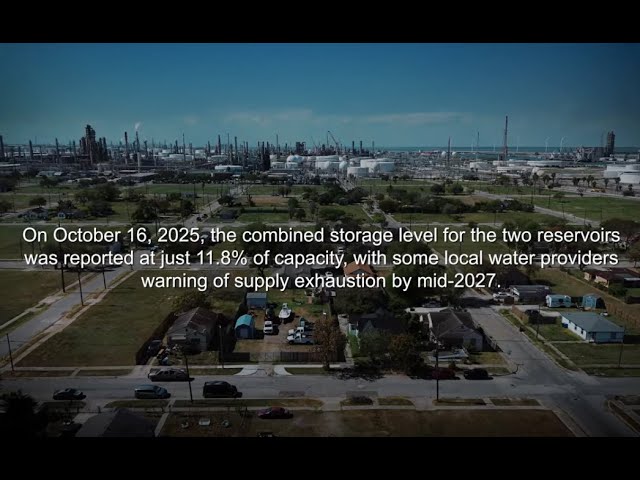
The Bullard Center for Environmental and Climate Justice at Texas Southern University released "Green Light to Pollute in Texas." This comprehensive report analyzes 89 new or expanding petrochemical facilities across five Texas regions.
Its stark findings reveal that 9 out of 10 facilities are planned in counties with higher concentrations of people of color and families in poverty. Nearly half are in neighborhoods among the worst 10% in the U.S. for toxic air releases. Furthermore, 93% are near other high-risk chemical plants, compounding threats of explosions, leaks, and chronic disease.
A related documentary features residents detailing how this industrial expansion has impacted their communities.

Texas is a global petrochemical hub, leading the U.S. in refining capacity and production. The Greater Houston area alone accounts for over 42% of the nation's base capacity.
This industrial concentration disproportionately affects fenceline communities, often low-income communities of color. They face increased health and environmental risks from facility expansions, which the Texas Commission for Environmental Quality frequently approves despite public resistance.

Inaam Chattha, who experienced eco-anxiety as a teen, channeled his concern into environmental activism, volunteering, and exploring the intersection of race, land, grief. Now a medical student, he authored children's books on eco-emotions and was named a Top 25 Under 25 Environmentalist by Starfish Canada.
In 2023, Chattha launched Green Mind, a national, youth-led initiative. It provides culturally grounded educational materials and a bilingual Climate Wellness Toolkit to help young people, especially from underrepresented communities, cope with climate anxiety and take action. The toolkit is used in Ontario classrooms for somatic grounding, journaling, and peer connection.
Environmental Scientist and Advocate
What EarthSayers stands for
Discover Diverse Voices on EarthSayers
Unlike algorithm-driven platforms that push you into a content bubble, we ensure you hear a variety of perspectives from scientists, activists, Indigenous leaders, business innovators, and everyday citizens working toward sustainability.
EarthSayers CINEMA
Watch, learn and lead—sustainability starts with you.
The Thinking Game | Full documentary | Tribeca Film Festival official selection
“The Thinking Game” is the inside story of DeepMind's groundbreaking AI research, culminating in the Nobel Prize-winning AlphaFold breakthrough. Filmed over five years by the award-winning team behind "AlphaGo," this documentary explores co-founder Demis Hassabis's lifelong pursuit of artificial general intelligence and the rigorous scientific journey from mastering strategy games to solving the 50-year-old protein folding problem.
Following its world premiere at the Tribeca Festival, "The Thinking Game" is now available to watch for free. For those interested in hosting a screening for a classroom, community, or workplace, visit: rocofilms.com/films/the-thinking-game/.


