




Special Collections:
Forests and Oceans
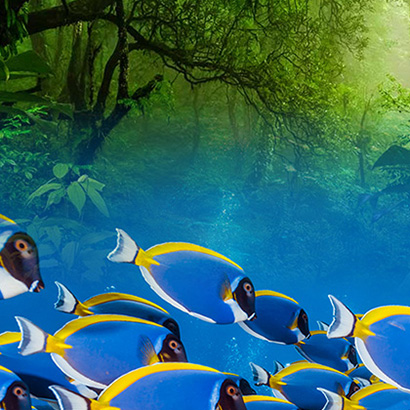

Happy International Day of Biological Diversity! 🐳🐠🪼 Our oceans may be home to as many as 2.2 million species, from iconic animals like dolphins and sea turtles to creatures we haven’t even discovered yet. Every species plays a role in keeping our oceans healthy, balanced, and full of life. Protecting ocean biodiversity means protecting the future of our blue planet. #biodiversityday #ocean #marinelife

Last week, we announced agreements with county and city leaders to bring our operations to the Los Angeles and San Gabriel Rivers. Following the success of Interceptor 007 in Ballona Creek, this project is expected to prevent an estimated 410–628 tons of plastic from entering the Pacific Ocean each year, with deployments planned ahead of the LA28 Olympic Games. Stay tuned for more progress 🚀

Rivers are the main arteries carrying waste from land to sea. And when plastic reaches the ocean... it also reaches marine life. Our research showed that 76% of loggerhead turtles in the Indian Ocean had ingested plastic, much of it transported through rivers. With our 30 Cities Program, we plan to tackle the inflow of plastic into the ocean in key cities to stop up to 1/3 of it by 2030.

11 years ago, over 120,000 gallons of oil spilled onto California’s Refugio Beach, killing wildlife and devastating coastal communities. We’re highlighting five of the worst oil spills in U.S. history. These disasters have proved where they drill, they spill — and our oceans, marine life, and coastal communities pay the price. Say NO to the U.S. government’s proposed expansion of offshore drilling: https://oceana.ly/ProtectOurCoasts #oilspill #history #offshoredrilling

Orcas are cunning predators that are known to hunt in a strategic, pack-like formations! Learn more about orcas with our Marine Life Encyclopedia: https://oceana.ly/4dPU8W6 #orca #killerwhale #marinelife

The Endangered Species Act of 1973 has protected countless species from going extinct for the past half century. But as the protections they rely on face ongoing attacks from the U.S. government, let’s take a look back at why this landmark law was created, what it does, and how it is helping save these five marine animals from extinction. We must stand in its defense: https://oceana.ly/42vOuSR — Get Involved — Subscribe to Oceana so you don't miss a new video! https://oceana.ly/subscribe Become a Wavemaker to stand for oceans: https://oceana.ly/4rGhn8Z And keep up with Oceana on... Facebook: https://www.facebook.com/oceana/ Instagram: https://www.instagram.com/oceana X: https://twitter.com/oceana TikTok: https://www.tiktok.com/@oceana — Video Chapters — 0:00 Endangered Species Act origins 1:12 Green sea turtles 2:12 Brown pelicans 3:11 Sea otters 4:20 Humpback whales 6:04 Giant oceanic manta rays 7:12 What's next for the ESA? #endangeredspecies #endangeredspeciesday #wildlifeconservation

Our mission is to permanently remove waste from the environment, ensuring it never re-enters.
In Honduras, our partner Terrapolyester transforms plastic collected by our Interceptor 021 in El Quetzalito. This recovered material is repurposed into durable household items such as brooms, brushes, and pillows.

Microplastics are pervasive, infiltrating our environment, bodies, and food globally. Their widespread presence is no longer a secret, with public awareness growing almost as fast as the particles themselves.
Given this established ubiquity, it's time for action. Learn more about microplastics and what Oceana is doing to address the plastic crisis: oceana.ly/4eCNZgZ

Thousands of eel traps, a type of ghost gear, were discovered floating in the Great Pacific Garbage Patch (GPGP). These funnel-shaped devices continue to "ghost fish," causing entanglement, ingestion, and habitat damage, severely impacting marine life, including endangered species. Discarded fishing gear constitutes the largest component of the GPGP.
Recent research, analyzing over 21,000 pieces of derelict gear, identified large offshore fleets as primary sources, with smaller coastal fisheries contributing less. The study highlighted the extreme durability of this gear, which can persist for years and travel vast ocean distances, underscoring the urgent need for cleanup efforts.

The 1969 Santa Barbara oil spill devastated California's coast, catalyzing the environmental movement. We highlight five of the worst U.S. oil spills, demonstrating that where drilling occurs, spills follow, harming our oceans, marine life, and coastal communities.
Oppose the U.S. government’s proposed expansion of offshore drilling: https://oceana.ly/ProtectOurCoasts

While Interceptors can stop most river-borne plastic from reaching the ocean, lost fishing gear presents another significant threat. The scale is immense; for instance, lost longline nets alone could stretch 750,000 km, enough to reach the moon and back.
To address this, we are conducting extensive research to understand its origins. We have also joined the Global Ghost Gear Initiative (GGGI) to actively contribute to shaping policies and initiatives that tackle this critical problem.


Brown pelicans, once decimated by the feather trade and toxic pesticides, made a remarkable recovery. Following the U.S. ban of DDT and habitat protections under the ESA, their populations rebounded, leading to their full removal from the endangered species list by 2009.
Leading up to Endangered Species Day on May 15, we're highlighting marine animals protected by the U.S. Endangered Species Act. Join us in defending this landmark law and species like these: https://oceana.ly/ESA

Indonesia hosts our first river Interceptor, Interceptor 001, in Jakarta’s Cengkareng Drain, alongside Interceptor 020 in the nearby Cisadane River.
Lessons learned from these deployments are now shaping future in-country and global efforts.

Indonesia is a key focus of our 30 Cities Program, with planned deployments in Jakarta, Denpasar (Bali), and Tasikmalaya (West Java). The country already hosts our first river Interceptor, 001, in Jakarta’s Cengkareng Drain, and Interceptor 020 in the Cisadane River. Since deploying Interceptor 001 in 2019, we've partnered with local authorities and communities, adapting solutions to scale operations. Interceptor 020 exemplifies this adaptive approach, providing crucial insights for future efforts in Indonesia and worldwide.
Stay updated by subscribing to our YouTube channel. Learn more and support us at The Ocean Cleanup. Follow us on Facebook, Instagram, TikTok, and X.
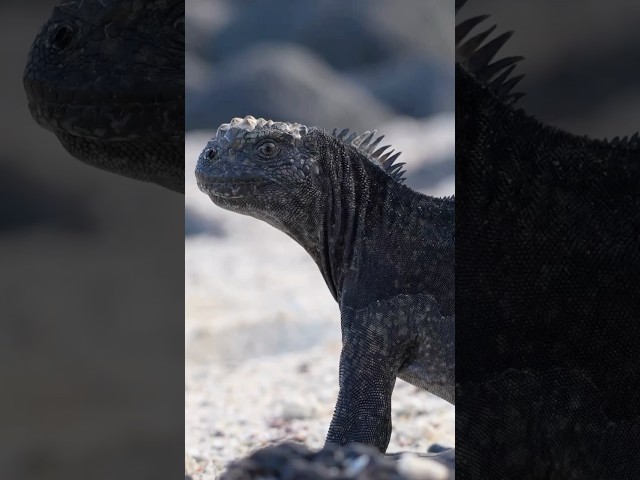
The marine iguana is the only lizard globally that forages in the ocean, making it a truly unique reptile. 🦎
Learn more about marine iguanas and other species in our Marine Life Encyclopedia: https://oceana.ly/marineiguana

Interceptor deployments are planned for the Philippines as part of our 30 Cities Program.
The first Interceptor will be deployed in the Meycauayan River in the coming months. This aims to prevent trash from the Manila Bay Region from flowing into the ocean.

On Daram Island, Philippines, illegal fishing has severely depleted local fisheries, causing malnutrition. A group of women are now bravely confronting these practices at sea to protect their community and livelihoods. This is their inspiring story.
Learn more about Oceana's vital work in the Philippines: https://ph.oceana.org/. Get involved by subscribing for updates: https://oceana.ly/subscribe, or become a Wavemaker to support ocean conservation: https://oceana.ly/4rGhn8Z.
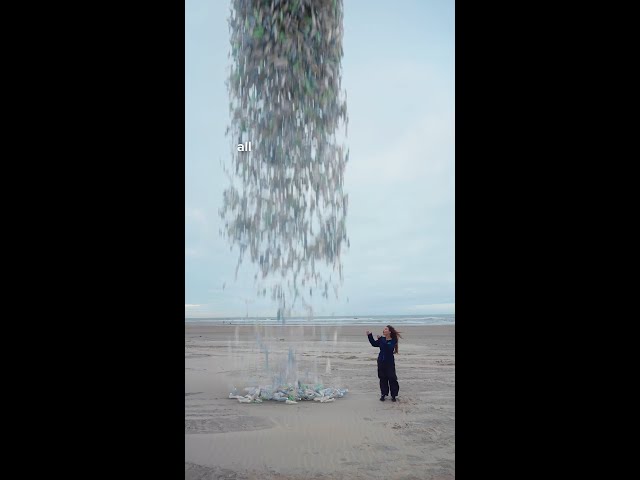
This year, your monthly donation now has approximately 2.5 times the impact. Thanks to more Interceptors in the water and increasingly efficient operations, we are able to collect significantly more trash for every dollar contributed.
As our efforts expand, so does your contribution's reach. Take action today to amplify your impact: https://visit.theoceancleanup.com/4twyITw
Please note: No AI was used in this video; the bottles are 3D animated for illustration.

Sea otters are remarkable for their use of rocks as tools to crack open shells.
Explore more about these fascinating marine mammals in our Marine Life Encyclopedia: oceana.ly/seaotter
Environmental Scientist and Advocate
What EarthSayers stands for
Discover Diverse Voices on EarthSayers
Unlike algorithm-driven platforms that push you into a content bubble, we ensure you hear a variety of perspectives from scientists, activists, Indigenous leaders, business innovators, and everyday citizens working toward sustainability.
EarthSayers CINEMA
Watch, learn and lead—sustainability starts with you.
The Thinking Game | Full documentary | Tribeca Film Festival official selection
“The Thinking Game” is the inside story of DeepMind's groundbreaking AI research, culminating in the Nobel Prize-winning AlphaFold breakthrough. Filmed over five years by the award-winning team behind "AlphaGo," this documentary explores co-founder Demis Hassabis's lifelong pursuit of artificial general intelligence and the rigorous scientific journey from mastering strategy games to solving the 50-year-old protein folding problem.
Following its world premiere at the Tribeca Festival, "The Thinking Game" is now available to watch for free. For those interested in hosting a screening for a classroom, community, or workplace, visit: rocofilms.com/films/the-thinking-game/.


