




Special Collections:
Plastic in Our Oceans

Last week, we announced agreements with county and city leaders to bring our operations to the Los Angeles and San Gabriel Rivers. Following the success of Interceptor 007 in Ballona Creek, this project is expected to prevent an estimated 410–628 tons of plastic from entering the Pacific Ocean each year, with deployments planned ahead of the LA28 Olympic Games. Stay tuned for more progress 🚀

Rivers are the main arteries carrying waste from land to sea. And when plastic reaches the ocean... it also reaches marine life. Our research showed that 76% of loggerhead turtles in the Indian Ocean had ingested plastic, much of it transported through rivers. With our 30 Cities Program, we plan to tackle the inflow of plastic into the ocean in key cities to stop up to 1/3 of it by 2030.

Our mission is to permanently remove waste from the environment, ensuring it never re-enters.
In Honduras, our partner Terrapolyester transforms plastic collected by our Interceptor 021 in El Quetzalito. This recovered material is repurposed into durable household items such as brooms, brushes, and pillows.

Thousands of eel traps, a type of ghost gear, were discovered floating in the Great Pacific Garbage Patch (GPGP). These funnel-shaped devices continue to "ghost fish," causing entanglement, ingestion, and habitat damage, severely impacting marine life, including endangered species. Discarded fishing gear constitutes the largest component of the GPGP.
Recent research, analyzing over 21,000 pieces of derelict gear, identified large offshore fleets as primary sources, with smaller coastal fisheries contributing less. The study highlighted the extreme durability of this gear, which can persist for years and travel vast ocean distances, underscoring the urgent need for cleanup efforts.

While Interceptors can stop most river-borne plastic from reaching the ocean, lost fishing gear presents another significant threat. The scale is immense; for instance, lost longline nets alone could stretch 750,000 km, enough to reach the moon and back.
To address this, we are conducting extensive research to understand its origins. We have also joined the Global Ghost Gear Initiative (GGGI) to actively contribute to shaping policies and initiatives that tackle this critical problem.


Indonesia hosts our first river Interceptor, Interceptor 001, in Jakarta’s Cengkareng Drain, alongside Interceptor 020 in the nearby Cisadane River.
Lessons learned from these deployments are now shaping future in-country and global efforts.

Indonesia is a key focus of our 30 Cities Program, with planned deployments in Jakarta, Denpasar (Bali), and Tasikmalaya (West Java). The country already hosts our first river Interceptor, 001, in Jakarta’s Cengkareng Drain, and Interceptor 020 in the Cisadane River. Since deploying Interceptor 001 in 2019, we've partnered with local authorities and communities, adapting solutions to scale operations. Interceptor 020 exemplifies this adaptive approach, providing crucial insights for future efforts in Indonesia and worldwide.
Stay updated by subscribing to our YouTube channel. Learn more and support us at The Ocean Cleanup. Follow us on Facebook, Instagram, TikTok, and X.

Interceptor deployments are planned for the Philippines as part of our 30 Cities Program.
The first Interceptor will be deployed in the Meycauayan River in the coming months. This aims to prevent trash from the Manila Bay Region from flowing into the ocean.
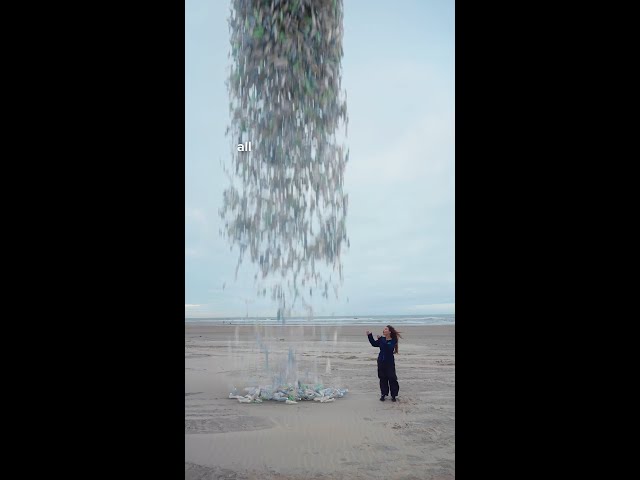
This year, your monthly donation now has approximately 2.5 times the impact. Thanks to more Interceptors in the water and increasingly efficient operations, we are able to collect significantly more trash for every dollar contributed.
As our efforts expand, so does your contribution's reach. Take action today to amplify your impact: https://visit.theoceancleanup.com/4twyITw
Please note: No AI was used in this video; the bottles are 3D animated for illustration.
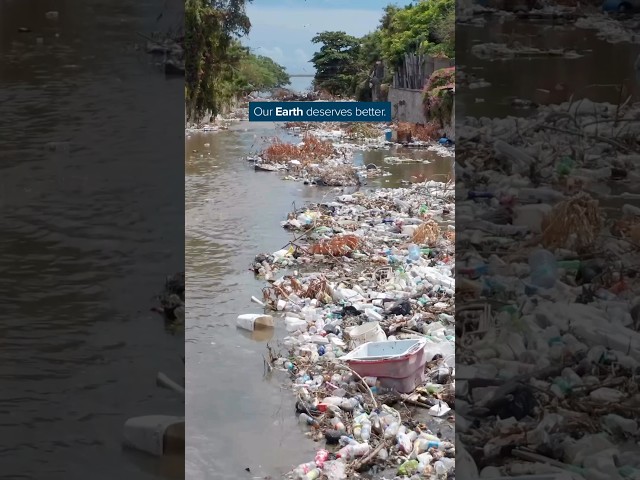
Help our mission reach like-minded people.
Share this video.

Inspired by a picture book, Max Romey journeyed to a remote Alaskan beach for marine debris, discovering a more complex story. Five years prior, an ocean plastics cleanup on Kayak Island left him overwhelmed. While the issue remains intricate, sharing the "big picture" now helps him envision collaborative solutions.
Learn more through Max's videos: No Lost Shoe, Give A Beach A Bottle, and Trailbound Alaska.

UNEP has partnered with syndicated cartoonist Jim Toomey for a video series addressing ocean litter.
Trash, even from upstream, travels hundreds of miles to remote oceans, causing billions in damage and threatening marine life and human health.
The "Two Minutes on Oceans with Jim Toomey" series uses animation and humor to simplify complex scientific issues for the public. View additional videos at: www.rona.unep.org/toomey
Join a filmmaker and a world record free-diver on an epic global adventure.
They travel the earth, uncovering the shocking impact of plastic pollution on our oceans and marine life.

"Plastic Pollution, Our Oceans, Our Future," a short film by Christopher Hanson (USA), secured 3rd Prize in the 2016 Film4Climate Global Video Competition, presented by Connect4Climate and partners.
This film features 17 Hawaiian students examining plastic pollution's impact on their beaches and envisioning a sustainable future for the oceans, as Hawaii considers banning single-use polystyrene.
For more information, visit the official Film4Climate website, see all winners, or read the World Bank press release.

To date, we have successfully intercepted over 12,000 kg of trash.
We are continuously working on efficiency improvements to enhance these efforts.

The Ocean Cleanup's Research team has reached a significant milestone, releasing 100 peer-reviewed scientific publications. Science is central to understanding ocean plastic pollution—its scale, sources, and behavior. This research has informed cleanup strategies, from mapping the Great Pacific Garbage Patch to identifying polluting rivers and understanding industrial fishing, helping trace pollution origins and guiding effective interventions.
As global cleanup efforts scale, our focus will shift from diagnosing the problem to measuring and demonstrating our impact. Committed to open science, all publications are publicly accessible on our website. Learn more about this achievement from Head of Research, Laurent Lebreton: https://visit.theoceancleanup.com/4mDjLML

Our work continues in Jamaica.
In Kingston, nine Interceptors prevent trash from flowing into the Caribbean Sea.


On a remote North Pacific atoll, albatross chicks are dying, their bodies filled with plastic.
Chris Jordan's film, "Albatross," unflinchingly portrays this tragedy, while also inspiring a deep appreciation for life on Earth.
Environmental Scientist and Advocate
What EarthSayers stands for
Discover Diverse Voices on EarthSayers
Unlike algorithm-driven platforms that push you into a content bubble, we ensure you hear a variety of perspectives from scientists, activists, Indigenous leaders, business innovators, and everyday citizens working toward sustainability.
EarthSayers CINEMA
Watch, learn and lead—sustainability starts with you.
The Thinking Game | Full documentary | Tribeca Film Festival official selection
“The Thinking Game” is the inside story of DeepMind's groundbreaking AI research, culminating in the Nobel Prize-winning AlphaFold breakthrough. Filmed over five years by the award-winning team behind "AlphaGo," this documentary explores co-founder Demis Hassabis's lifelong pursuit of artificial general intelligence and the rigorous scientific journey from mastering strategy games to solving the 50-year-old protein folding problem.
Following its world premiere at the Tribeca Festival, "The Thinking Game" is now available to watch for free. For those interested in hosting a screening for a classroom, community, or workplace, visit: rocofilms.com/films/the-thinking-game/.


