



Special Collections:
Indigenous Peoples Month


What do treaties mean for Native sovereignty, cultural survival, and the right to hunt, fish, and gather? This documentary explores those questions through Native voices, historical perspectives, and coverage of a wild rice harvesting action in Minnesota. At its heart is a fundamental disagreement: are tribal members exercising rights their nations never surrendered, or participating in an activity the state can authorize through a temporary permit?
Through interviews and on-the-ground reporting, the film presents treaty rights not as distant promises or special favors, but as living commitments with consequences for families and communities today. Speakers describe how harvesting wild rice connects food, identity, spirituality, and responsibility to future generations. Their accounts challenge viewers to look beyond the act of gathering rice and consider the larger relationship between Native nations, the United States, and state governments.
The video introduces a dispute involving the 1855 treaty and off-reservation harvesting rights. A central theme is the distinction between rights that were retained and privileges that were granted.
Content note: Includes discussion of historical trauma, colonial violence, and explicit racist language quoted in an account of harassment. The film documents the positions expressed at the time of recording; it is not a statement of current law or legal advice.

Elizabeth Warren calls for a fundamental reset in relations between the federal government and Tribal Nations, arguing that sovereignty, treaty obligations, and essential services must be honored through action rather than promises. Speaking during the 2020 presidential campaign, she presents a vision of government-to-government partnership built on respect, accountability, and sustained investment. Her central message is that the United States must change the structures that have allowed it to acknowledge its responsibilities to Native peoples while repeatedly failing to fulfill them.
Introduced by Deb Haaland, Warren begins by recognizing the resilience, leadership, and innovation she encounters across Indian Country. She acknowledges Tribal leaders, entrepreneurs, students, and advocates working to strengthen their communities. She also offers a personal apology for harm she has caused, saying she has listened and learned. She then turns to the federal government’s history of broken promises, framing her proposals as obligations rooted in the trust and treaty relationship, not optional assistance or political generosity.
Throughout the speech and discussion, Warren returns to “big structural change.” Full funding for housing, health care, education, and infrastructure, she argues, should not depend on scattered legislative fixes or minor regulatory adjustments. A meaningful nation-to-nation relationship requires rules, resources, and institutions that make federal commitments dependable. Her answers connect the recognition of Tribal sovereignty with the practical means to exercise it, emphasizing that legal authority without adequate funding leaves communities unable to meet urgent needs.

What happens when an eagle grows up believing it is a chicken? In this moving and often humorous teaching, Don Coyhis shares the story of two young eagles who lose touch with their true nature—and the unexpected guide who helps them remember. Through their journey, he explores cultural identity, the lasting effects of forced assimilation, and the power of reconnecting with who you are.
The story begins when a farmer discovers two orphaned eaglets and brings them home. Unsure how to care for them, he places them in his chicken coop. Surrounded by chickens, the eagles learn to live as chickens do. They accept the coop as their world, even as their growing bodies, unfamiliar voices, and awkward attempts to scratch the ground suggest that something does not fit.
With warmth, laughter, and an unmistakable sense of purpose, Coyhis invites viewers to consider the difference between adapting to imposed expectations and remembering an identity that has never disappeared. The story also highlights the importance of guides, elders, and community members who recognize a person’s strength before that person can recognize it themselves.
Watch as a simple animal story becomes a powerful reflection on cultural survival, healing, and the courage required to leave familiar limitations behind. At its heart is an invitation to remember, reconnect, and help others do the same: spread your wings, reclaim your identity, and discover what it means to soar as yourself.

In this testimony, Melvin Lee Houston reflects on the unresolved search for the remains of the 38 Dakota men who were hanged, the struggle to recover what was taken, and the responsibility to remember those whose families and communities are still seeking answers.
For Houston, this is not a closed chapter of history. It is a continuing loss, carried through generations and expressed in a direct, urgent question: Where are their bodies? His words connect the search for physical remains with the enduring presence of the ancestors in Dakota life, memory, and identity.
At the heart of this conversation is a call for accountability. Houston questions how institutions and authorities could preserve objects and maintain detailed records while failing to provide an adequate accounting of the men’s bodies. His words ask what records might still exist, what information has not been shared, and who bears responsibility for helping families find answers.
Content note: This video discusses execution, human remains, and the treatment of ancestors’ bodies.
Historical claims are presented as recounted in Houston’s testimony.
#DakotaHistory #Repatriation #IndigenousVoices

What is historical trauma, and why do its effects continue long after the events that first caused it? In this conversation, Melissa Walls introduces working definitions of historical trauma and explains why the word “historical” should not be mistaken for “over.” Focusing on Indigenous experiences, she connects collective emotional and psychological harm to the ongoing realities of oppression, marginalization, discrimination, and microaggressions.
The clearest expression of that idea comes when Walls says that historical trauma is historical only insofar as it started in the past. This distinction is the heart of the video. “Historical” identifies an origin; it does not necessarily identify an ending. To understand the concept, viewers must look not only backward at what happened, but also at the ways its effects remain visible in contemporary life.
This short interview is useful for viewers encountering the term for the first time, as well as students, educators, and others looking for a clear foundation for further discussion. It introduces key ideas without suggesting that a brief definition can capture every community’s experience. Walls’s opening acknowledgment of healthy debate is an important reminder that historical trauma remains a subject of conversation among scholars and within communities themselves.

Wounded Knee is more than a name in a history book. For Mike Her Many Horses, it is a place connected to community, memory, grief, and the continuing struggle for dignity. In this video, he shares his perspective on the forces leading to the 1890 Wounded Knee Massacre and reflects on the complicated legacy of the 1973 occupation.
What does it mean to live near a place whose name carries generations of grief, resistance, and unresolved history? In this episode, Mike Her Many Horses reflects on Wounded Knee, connecting the pressures that preceded the 1890 massacre with the community divisions and renewed sense of identity associated with the 1973 occupation.
Mike begins with the struggle over land. He describes a world reshaped by the destruction of the buffalo, the expansion of railroads and settlement, and government demands that his people surrender more of their homeland. In his account, hunger and reduced treaty provisions were not separate from politics. They were part of the pressure surrounding agreements, allotment, and the opening of land to homesteading.
His reflections emphasize what those changes meant for everyday survival. Land supported food, movement, relationships, and independence. Drought made imposed expectations of farming even harder to meet, while promises of assistance failed to provide security. Mike describes the anger and determination of people who resisted further removal and the breaking apart of their larger homeland.
From there, he turns to the Ghost Dance, describing prayers, songs, and dancing rooted in a vision of restoration. He speaks of a hoped-for world with plentiful food, healthy horses, and freedom from outside domination. That spiritual hope forms the backdrop to his account of government alarm, military intervention, and Chief Big Foot’s people traveling toward Pine Ridge.
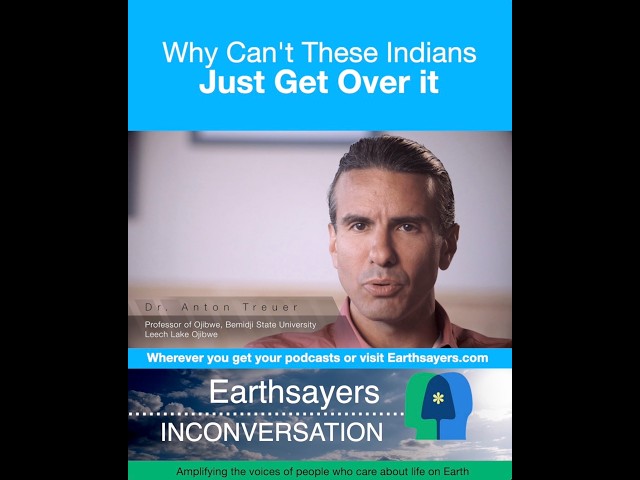
Historical Trauma, Native Voices, and the Path to Reconciliation
Why are Native peoples so often asked to “get over” the past when its consequences continue to shape their lives today? In this episode, Anton Treuer and Lakota American Indian Movement participant Rick McArthur offer two complementary perspectives on historical trauma, reconciliation, and the ongoing realities of Indigenous experience. Together, their reflections challenge listeners and viewers to move beyond dismissal and defensiveness toward understanding, accountability, and meaningful change.
Watch or listen with an open mind, reflect on the experiences shared, and consider how greater understanding can become a foundation for respect, stronger relationships, and action in the communities we share today and for future generations.
Featuring:
Anton Treuer
Professor of Ojibwe at Bemidji State University
Editor of the Oshkaabewis Native Journal (an academic journal of the Ojibwe language)
Author, Historian, and Speaker
Vice President of the Board for the Waadookodaading Ojibwe Language Institute
Governing Board Member for the Minnesota State Historical Society
Rick McArthur — (Former Tribal Chairman of the White Earth Nation) American Indian Movement (AIM) activist and legal advocate based in Minneapolis, Minnesota, closely associated with AIM Legal Resources and the city's Legal Rights Center.
Segments taken from the feature length documentary Dodging Bullets on Historical Trauma.

“Dodging Bullets—Stories from Survivors of Historical Trauma” is a new film exploring the profound impact of generational oppression and trauma on Native Americans. It examines the loss and remarkable resilience of Indigenous communities.
The film reveals how historical trauma, stemming from first contact with Europeans, contributes to disproportionately high health and social issues among Indigenous populations. It features cross-generational perspectives from Native people, researchers, and politicians, highlighting the unique challenges resilient communities continue to face.
Watch “Dodging Bullets” on AppleTV and Prime Video.
Environmental Scientist and Advocate

