



Cooperative finance for inclusive and resilient agrifood systems
United Nations Food and Agricultural organization
Cooperative financial institutions are essential for creating inclusive and equitable agrifood systems. In this video for the International Symposium on Cooperative Financial Institutions, Cécile Berranger from FAO discusses how savings and credit cooperatives, cooperative banks, and credit unions support small-scale farmers, women, and youth in accessing finance and investing in climate adaptation.
She emphasizes the importance of enabling policy frameworks and financial literacy through FAO’s Farm Business School Forward programme. As 2026 approaches, marking the International Year of the Woman Farmer and the International Year of Rangelands and Pastoralists, Berranger highlights the vital role of cooperatives for women farmers and pastoral communities, reaffirming FAO’s commitment to collaborating with the International Cooperative Alliance and COPAC members.
You might also like

The Global-Hub on Indigenous Peoples’ Food and Knowledge Systems is a leading think tank that fosters intercultural knowledge co-creation. It comprises 40 institutions, 5 research networks, and over 250 experts from diverse sociocultural regions worldwide. This initiative connects Indigenous Peoples’ knowledge with global policymaking, emphasizing its importance. The flagship publication, the White/Wiphala Paper o...

The Food and Agriculture Organization of the United Nations (FAO) presents "Bioeconomy talks" on sustainable bioeconomy for agrifood systems transformation. This session highlights innovative approaches to sustainable shrimp farming in ASEAN, focusing on biotechnology and management practices to improve productivity, reduce environmental impacts, and enhance food security. These efforts support resilient aquacultu...
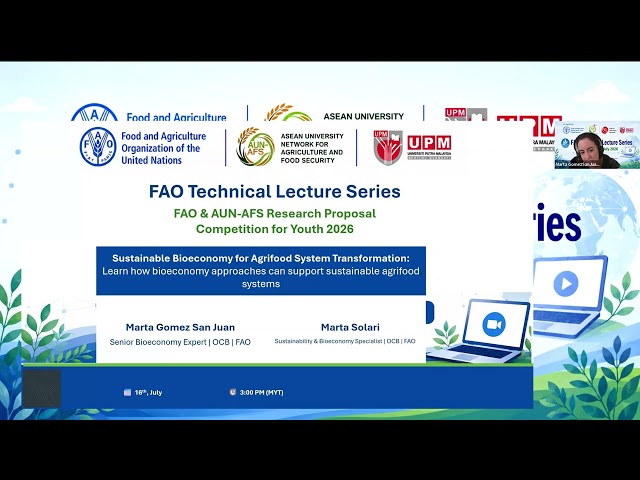
This FAO Technical Lecture Series webinar, part of the FAO & AUN-AFS Research Proposal Competition for Youth 2026, discusses the sustainable bioeconomy’s role in transforming agrifood systems. Presented by Marta Solari and Marta Gómez from FAO, the session covers how bioeconomy can create value from biological resources, reduce waste, and enhance climate resilience. The discussion includes practical examples from ...

This video from Karamoja, Uganda, showcases the extensive knowledge of pastoralists regarding their rangelands. Through the experiences of Maria Koriang, Longoli John, and others, it discusses livestock mobility, changing grazing conditions, and the necessity for grazing areas to recover. It also emphasizes the often-overlooked contributions of pastoralist women in land, water, plants, and animal care. Produced by...
Environmental Scientist and Advocate

