



Dancing Frogs In The Western Ghats
Center for Biological Diversity
The Western Ghats of India are home to 24 species of "dancing frogs" from the Micrixalidae family. These amphibians earned their name because males perform a unique foot-waving display, known as foot-flagging, to attract females during the breeding season.
This distinctive gesture likely compensates for their quiet croaks. Their calls are often too faint to compete with the surrounding environmental noise, making the visual foot-flagging crucial for successful mating.
You might also like

The Center for Biological Diversity is a leading organization dedicated to protecting endangered species and their habitats worldwide. Its team comprises lawyers, scientists, and activists. Learn more about their vital work: biologicaldiversity.org

Plastic pollution overwhelms our oceans. The Great Pacific Garbage Patch, if a country, would rank as the world's 19th largest. Explore its immense scale and compare it to other regions using our interactive map: https://biodiv.us/GreatPacificGarbagePatch.

The beaver, North America's largest rodent, is renowned for its engineering prowess. It acts as a master builder and hydroengineer, skillfully constructing dams and lodges that reshape landscapes. Beyond these impressive capabilities, recent video evidence from Utah's Zion National Park suggests another surprising trait: the beaver is also a serious proponent of self-care.
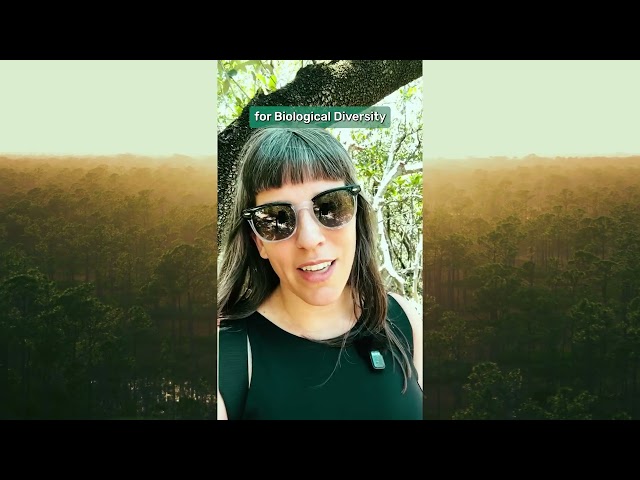
Florida panthers, with likely fewer than 200 remaining, face critical habitat loss in southwest Florida. Development confines them to shrinking pockets, forcing dangerous crossings and threatening their survival. Now, another large-scale residential and commercial project threatens to eliminate nearly 5,000 more acres. This will inevitably lead to increased roads, vehicle strikes, and deadly conflict over their li...
Environmental Scientist and Advocate

