



Leading circular design in Sub-Saharan Africa
Ellen MacArthur Foundation
Discover circular design principles, a global shift in product development. This live conversation explores how designers worldwide are incorporating these principles into their work and products.
Join designers Isatu Harrison (Sierra Leone) and Maxwell Mutanda (Zimbabwe), alongside Hannah Robinson from the British Council, as they discuss the circular economy in Sub-Saharan Africa. Topics include its proponents, design's role in this transition, and its impact on the rapidly growing youth population.
The session will also share practical examples of ongoing projects. This event is multistreamed via Restream.io.
You might also like

The Ellen MacArthur Foundation, launched in 2010 by world-record sailor Ellen MacArthur, is a UK charity accelerating the global transition to a circular economy. CEO Andrew Morlet highlights the Foundation's significant progress and ambitious future goals in this endeavor. It has become a global thought leader, influencing decision-makers across business, government, and academia. For more information on our work...

Current challenges demand new economic thinking that balances people's wellbeing, planetary boundaries, and a thriving economy. Kate Raworth, author of *Doughnut Economics*, will discuss her framework's role in shaping circular economy policies and business practices at the city level. Globally, cities and countries, from Europe to Costa Rica, are adopting Doughnut Economics. The Doughnut Economics Action Lab furt...
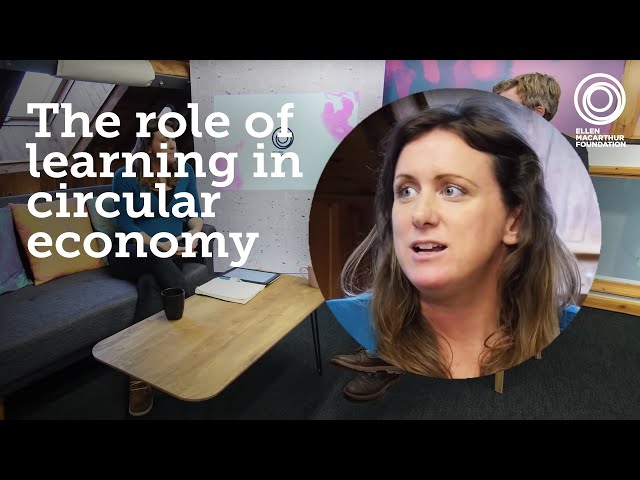
Our thinking, shaped by learning, influences the world. Adopting a circular economy demands a learning journey, new practices, and a significant mindset shift. The Ellen MacArthur Foundation supports this transition. Our Learning Team works across schools, universities, businesses, and informal settings to foster new mindsets. Tune in to learn more about our work and its impact.

Powered by Restream https://restream.io/ Join us for two interactive sessions exploring the meal's role in a circular economy for food. We'll discuss how tomorrow's food can be grown regeneratively, tackling climate change and boosting biodiversity through natural systems. Experts will share visions on technology and urban-rural relationships. The second session focuses on returning nutrients to the land. Imagine ...
Environmental Scientist and Advocate

