



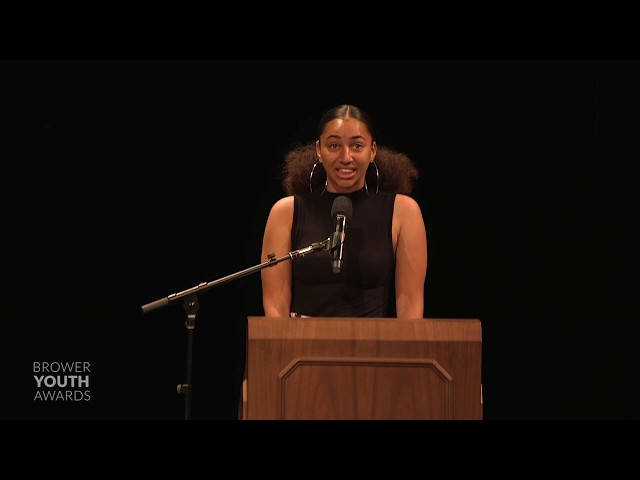
Mackenzie Feldman, 2019 Brower Youth Awards
BrowerYouthAwards BYA
Mackenzie Feldman, 23, from Honolulu, Hawaii, founded Herbicide-Free Campus to ban herbicides at schools nationwide. Her campaign began at UC Berkeley, inspired by Hawaii's industrial agriculture and its impact on land and people. After an herbicide spraying incident at UC Berkeley's volleyball courts, she successfully initiated a campus-wide ban.
A major achievement was the temporary ban of glyphosate across all University of California campuses. Mackenzie has since expanded her efforts nationally, mentoring students, providing resources, and training them in campaign strategy and alternative maintenance methods. She aims for a toxic-free world, protecting communities and ecosystems from harmful pesticides.
For more information, visit broweryouthawards.org. Film by Storyline Media.
You might also like

Tiffany Carey, an environmental studies major, believes community involvement is vital in research. For her University of Michigan project, she partnered with Detroit's Western International High School students to study urban pollen levels, a key factor in asthma and allergies. Over three years, ninth and tenth graders placed pollen collectors, confirming vacant lots were rich in allergy-causing ragweed. Carey th...

Raised in Vancouver and Toronto, Severn Cullis-Suzuki developed a lifelong passion for nature. At nine, she founded the Environmental Children's Organization (ECO) to educate peers on environmental issues. In 1992, ECO raised funds to attend the UN Earth Summit in Rio de Janeiro, where 12-year-old Severn delivered a powerful speech reminding global leaders of their actions' future impact, earning a standing ovatio...
Isha Clarke delivered a compelling speech at the 2019 Brower Youth Awards. The prestigious event was held on October 15 at the Herbst Theatre in San Francisco. Her address captivated the audience, highlighting important themes relevant to youth activism.

In August, the Bullard Center's Rapid Response Team convened experts nationwide in the Shiloh community to assess the impacts of flooding. This collaboration linked local experiences with specialized knowledge in ecology, engineering, and social work. By exploring flooding and potential solutions from a community perspective, the visit aims to inform and enhance Shiloh's post-flooding agenda.
Environmental Scientist and Advocate

