



Inovar Hoje para Nutrir o Amanhã
United Nations Food and Agricultural organization
A inovação vai além de tecnologias como dados e inteligência artificial; ela também envolve novas e antigas ideias. Isso pode incluir o uso criativo de recursos existentes ou a melhoria na disseminação de conhecimentos, tornando-os acessíveis a mais pessoas.
Para ter um impacto real, a inovação deve ser prática e adaptada às diversas realidades ao redor do mundo. Seja através de soluções modernas ou tradicionais, o objetivo é usar ciência, tecnologia e imaginação para produzir alimentos, proteger a natureza e construir um futuro melhor. Neste Dia Mundial da Alimentação, junte-se a nós para inovar hoje e nutrir o amanhã. Saiba mais em FAO.
You might also like

In Uganda, limited veterinary services create gaps in routine livestock healthcare for smallholder farmers. Private-sector veterinary paraprofessionals (VPPs) are crucial in filling this need. Supported by the Gates Foundation, FAO and partners empower VPPs with technical and business training. This model strengthens farm productivity by positioning VPPs as frontline providers of preventive livestock healthcare. A...

The Hand-in-Hand (HIH) Initiative aims to transform agrifood systems by eradicating poverty (SDG1), ending hunger (SDG2), and reducing inequalities (SDG10). It utilizes geospatial analytics and economic modeling to identify investment opportunities that can make a significant impact. By aligning country priorities with investment opportunities, the Initiative involves countries, the FAO, international financial in...

Deep-sea sharks are some of the most intriguing and least understood creatures on Earth, with over 500 species adapted to survive in extreme ocean depths. These sharks possess unique features like glowing eyes and enhanced senses, allowing them to thrive in their dark habitats. Researchers, fishers, and fisheries management organizations are working together through the Common Oceans Deep Sea Fisheries Project to ...
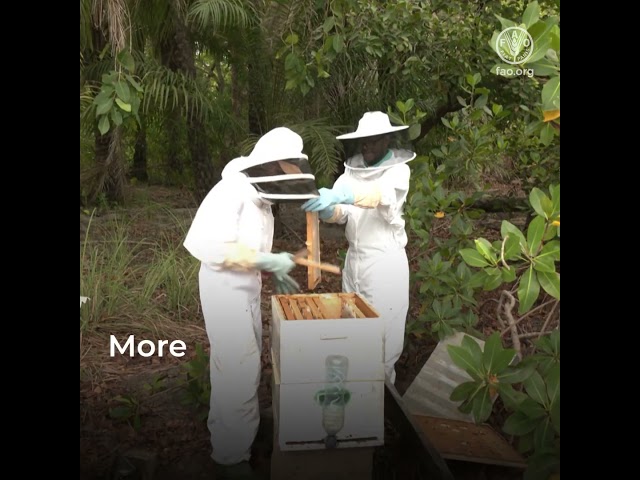
In Casamance, Senegal, beekeeper Innocence Delphine Nzalé discusses how FAO’s SAGA 2 project has enhanced her beekeeping practices in response to climate change. She shares insights on selecting optimal locations, harvesting without fire, and environmental protection, and now trains others to apply this knowledge. The project has also contributed to reforesting 30 hectares with melliferous trees and restoring 29 h...
Environmental Scientist and Advocate

