



Tackling plastic packaging pollution in India | DIF 2019
Ellen MacArthur Foundation
Plastic pollution poses a severe environmental threat. Plastic packaging constitutes nearly half of global plastic waste, much of it single-use. This plastic can take up to a thousand years to decompose, entering our food systems and projected to outweigh fish in oceans by 2050.
Ecoware confronts this challenge by producing 100% biodegradable and compostable packaging. Made from agricultural waste, their affordable and sustainable tableware, packaging, and medical products offer an alternative to single-use plastics.
Learn how Ecoware achieved this and if their model can be replicated in a session.
You might also like

In this episode of Conversations with a CE/O, Ken Pucker discusses Timberland's pioneering approach to corporate sustainability, including its use of renewable energy and commitment to community service. However, he highlights a significant oversight: while Timberland reduced Scope 1 and 2 emissions, Scope 3 emissions accounted for 96% of their total, which went unmeasured. Ken shares his concerns about the limita...

Our linear "take, make, waste" economic system has pushed Earth's planetary boundaries. This film explores how a circular economy offers immediate solutions to global challenges like climate change, biodiversity loss, and pollution, demonstrating that by doing things differently, we can still turn things around. The Ellen MacArthur Foundation, an international charity, champions the circular economy – a system des...
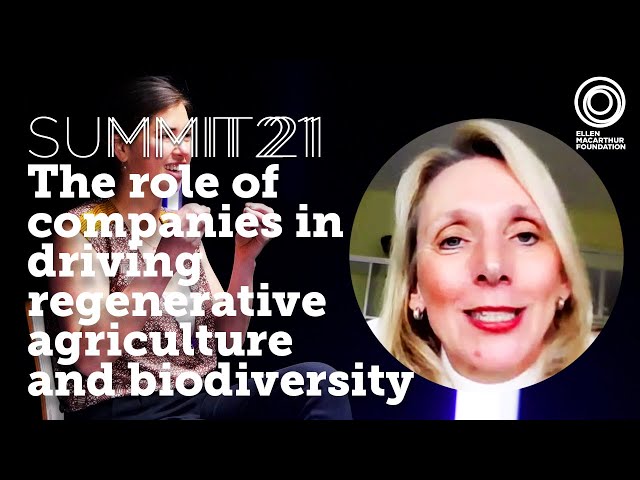
Emma Chow speaks with Hanneke Faber (Unilever) and Felipe Villela (reNature) about the crucial role companies and retailers play in advancing regenerative agriculture and biodiversity. The Ellen MacArthur Foundation, a UK charity, drives the transition to a circular economy through business, learning, insights, and communications. For more insightful videos, subscribe to The Ellen MacArthur Foundation on YouTube. ...

Cities are vital for advancing the circular economy, unlocking economic, environmental, and social benefits, especially as two-thirds of the global population will live in urban centers by 2050. Currently, cities face challenges from a "take-make-waste" linear economy. A circular economy offers a critical opportunity to rethink resource use and ensure long-term urban prosperity. The "Circular Economy in Cities" pr...
Environmental Scientist and Advocate

