



Connecting Forest Monitoring and Indigenous Peoples’ Land Rights in Central Africa
United Nations Food and Agricultural organization
In this interview, Joseph Itongwa Mukumu, Regional Coordinator of REPALEAC, discusses how forest monitoring and land tenure data can empower Indigenous Peoples in Central Africa to protect their territories and rights. He emphasizes the need to integrate traditional knowledge with national forest monitoring data.
The collaboration between the FAO and REPALEAC aims to enhance the documentation of Indigenous territories and improve their capacity to manage data, facilitating evidence-based decision-making and dialogue with governments regarding land rights.
You might also like

Sustainable Gastronomy Day highlights how global food systems link agriculture, environment, culture, and health. It promotes regenerative and inclusive approaches that protect ecosystems while ensuring livelihoods. This video features FAO Goodwill Ambassadors and followers demonstrating these vital principles. Subscribe to FAO on [YouTube](http://www.youtube.com/subscription_center?add_user=FAOoftheUN) and follow...
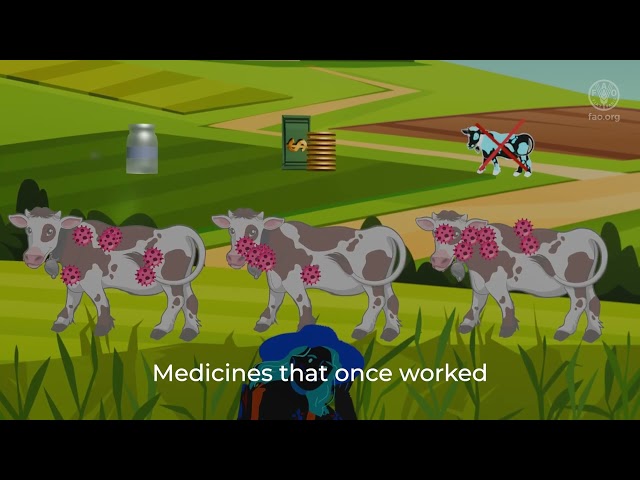
This short video aims to raise awareness about antimicrobial resistance (AMR) among livestock farmers. It features contributions from Dóra Kovács and Daniel Beltran-Alcrudo for the script, with production by György Argyelán. The audio narration was created using TTSMaker. For more resources, visit the FAO Animal Health page and the FAO Antimicrobial Resistance page. Subscribe to the FAO YouTube channel and follow ...

The National Agronomic Institute of Tunisia (INAT) hosted two training sessions on "Formulation and Manufacturing Technology of Organic Compound Feeds" on October 21-22, 2025. Held at INAT's Regional Center as part of the BIOREST project, these sessions aimed to impart theoretical and practical knowledge. Key topics covered raw material characteristics, manufacturing equipment, maintenance, and quality control for...

The Pressurized Pipe Irrigation System (PPIS) is revolutionizing water delivery to farmers by utilizing underground pressurized pipelines. This method minimizes leakage and evaporation, ensuring efficient and equitable water distribution. The video showcases how PPIS integrates with drip and sprinkler irrigation, digital monitoring, and farmer-led Water User Associations to enhance water-use efficiency, lower irri...
Environmental Scientist and Advocate

