



The FAO Global Partnership Programme for Transboundary Animal Diseases (GPP-TAD)
United Nations Food and Agricultural organization
The Global Partnership Programme for Transboundary Animal Diseases (GPP-TAD) is a country-led initiative aimed at enhancing animal health and sustainable livestock production. This program fosters shared responsibility and coordinated investments to strengthen global animal health systems.
This video presents GPP-TAD's vision for improving disease prevention, surveillance, emergency response, and innovative financing models. The FAO, along with key partners, will serve as a global convener, leveraging expertise and real-time intelligence to identify critical areas for action.
By mitigating systemic risks in value chains, GPP-TAD seeks to facilitate increased public and private investment in animal health and food systems. Learn more at FAO.
You might also like
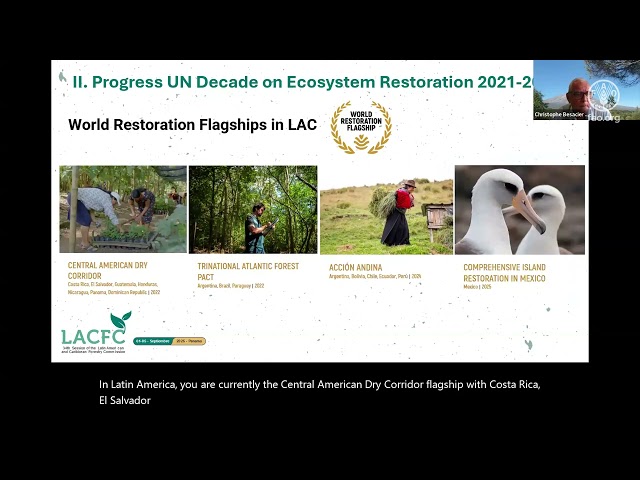
The Forestry Commission for Latin America and the Caribbean (COFLAC) advises the FAO on the region's forestry program. Its mandate, guided by national and regional priorities and international agreements, involves formulating policies for sustainable forest and wildlife management. COFLAC also facilitates implementation, promotes information exchange, and provides technical recommendations through its subsidiary b...

This documentary celebrates the International Year of the Woman Farmer 2026 by showcasing women in Bhutan who are preserving the country's buckwheat heritage while creating new opportunities for the future. Follow the journey of Bhutanese buckwheat from field to mill, kitchen, and market, highlighting generations of traditional knowledge and women's vital contributions to agrifood systems. Discover more about Bhut...

The initial moments after catching a tuna are crucial for maintaining its quality and value. Discover seven simple handling steps designed for small-scale fishers to enhance their catch's quality, minimize losses, and boost market value. This guide was developed through the FAO Common Oceans Tuna Project in collaboration with IPNLF and supported by the Global Environment Facility (GEF). For more information, visit...

Published on June 7, 2013, this testimony illustrates how a small farmer in El Salvador preserves biodiversity and combats hunger through seed saving and exchange. This practice aligns with the 2013 commitment of Bajo Lempa communities in El Salvador to agroecology. Their focus encompasses protecting local seeds, defending soil, and preserving water sources.
Environmental Scientist and Advocate

