



Special Collections:
The Economy


"Toward a Truly Free Market: A Distributist Perspective on the Role of Government, Taxes, Health Care, Deficits, and More" addresses why three decades of free-market efforts against Keynesian policies have led to larger government, greater debt, and centralized economic power. It asks how a truly free market can be achieved amidst capitalism's current crisis.
John C. Médaille, author of *The Vocation of Business: Social Justice in the Marketplace*, is an economics instructor at the University of Dallas. He writes and lectures on economics, with over thirty years in corporate management, small business, and five terms as an Irving, Texas city councilman.
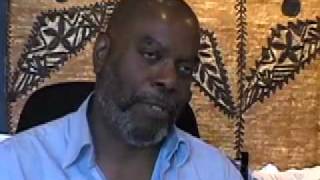
Dr. Sharif Abdullah, Founder and President of the Commonway Institute, explores criminality and morality across five economic systems. He highlights that legality does not always equate to morality.
His book, Creating a World That Works for All, delves deeper into these concepts.
Discover more related films, lectures, and interviews in Earthsayers.tv's Transforming Our Economy special collection.

This RSA Animate features philosopher Slavoj Zizek exploring the surprising ethical implications of charitable giving.
The content originates from the RSA, a long-standing charity dedicated to fostering social progress and disseminating world-changing ideas through its research, Animates, and free public events program. For more information, connect with the RSA via social media:
Follow on Twitter, like on Facebook, listen to podcasts, and see behind-the-scenes on Instagram. Produced and edited by Abi Stephenson; animation by Cognitive Media.

John Fullerton of the Capital Institute spoke with Ruth Ann Barrett of Earthsayers.tv about aligning capital with sustainability principles and the emergence of impact investing. He detailed how he integrates his personal values for a sustainable future into his own investment activities.
Fullerton also referenced the recent SoCap10 conference in San Francisco. He described it as the largest interdisciplinary gathering of individuals and institutions focused on the intersection of money and meaning.
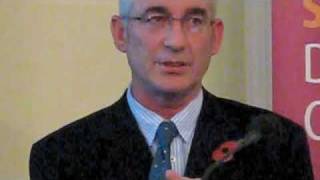
The suitability of our current economic model for a low-carbon world is under scrutiny. Tim Jackson, author of "Prosperity without Growth," argues that economic growth relentlessly drives us towards climate catastrophe, rather than offering a solution. He asserts that building a new economic model fit for a low-carbon future is the most urgent task of our time.
Professor Jackson contends that the prevailing system is failing, undermining wellbeing in rich nations and neglecting the poorest. He warns that it has already led to economic instability and, if unchecked, threatens a climate catastrophe. His book, an update to a highly acclaimed report, has significantly fueled the burgeoning debate on economic growth and its global consequences.

Is our economy fit for a low-carbon world? Tim Jackson, author of *Prosperity without Growth*, argues that the current economic model is driving us towards climate catastrophe, not away from it. He asserts that building a new, sustainable economic model is the most urgent task of our time.
Jackson, a leading sustainability adviser, contends that the prevailing system fails to deliver widespread prosperity, undermining wellbeing in rich nations and neglecting the poorest. Having already led to economic instability, it now threatens a climate crisis. His book, an update to a groundbreaking report for the Sustainable Development Commission, has significantly contributed to the burgeoning debate on economic growth's consequences for people and planet.

John Fullerton of the Capital Institute transitioned from Wall Street to sustainability advocacy. Influenced by Herman Daly's book, For the Common Good, he highlights the unsustainable practice of externalizing social and environmental costs and risks, citing the BP oil spill as a prime example.
Fullerton discussed these critical issues in an October 7, 2010 interview with Ruth Ann Barrett of Earthsayers.tv.

Dr. Peter Victor, Professor and former Dean of Environmental Studies at York University, was interviewed at the International DeGrowth Conference in Barcelona (March 25-29, 2010). He posits that economic growth is not necessary for a good life, and that living well without it is feasible.
The conference discussed not just stabilizing, but actively shrinking the economy—a more challenging but achievable goal requiring significant societal changes. A more in-depth speech by Dr. Victor is available on Earthsayers.tv.

Sociologist and author Juliet Schor presented her book, "Born to Buy: The Commercialized Child and the New Consumer Culture," at the City Club of San Diego in March 2005.
Schor's address explored themes of sustainability and the impact of contemporary consumer culture on children, drawing from her expertise as a noted sociologist.

UBC Professor William Rees argues that climate change is humanity's greatest collective threat. As a global culture, individual eco-footprint reductions are insufficient to address this challenge.
Sustainability demands a collective approach, not isolated actions. Cities must be designed to enable citizens to live sustainably, recognizing that we are all facing this critical situation together.

This 10-minute video highlights an interview with Dr. Paul Raskin on achieving a sustainable planetary civilization. Dr. Raskin emphasizes the need for a global citizens movement and a "Copernican shift" in how humans perceive their relationship with Earth.
Dr. Raskin is the President and Founder of the Tellus Institute, Founder of the Global Scenario Group, and a leader of the Great Transition Initiative. This interview complements Yale University's "Visions of a Sustainable World" Speaker series.

We are at a historical juncture requiring a swift transition to a different way of life, with the younger generation needing to step up.
Ashok Khosla, Chairman of Development Alternatives in New Delhi, India, offers significant expertise. He previously established and headed India's Office of Environmental Planning and Coordination.
His extensive background includes directing INFOTERRA for the UN Environment Programme, serving as a Special Advisor to the Brundtland Commission, and advising the United Nations, World Bank, and Global Environmental Facility.

Robert Costanza directs the Institute for Sustainable Solutions at Portland State University. He is also a co-founder and past-president of the International Society for Ecological Economics.
In his presentation, Dr. Costanza discusses sustainability, covering its definition and the processes required to develop solutions for a better, more sustainable world.

Dr. Peter G. Brown, Professor of Geography at McGill University, discusses key points from his book, "Right Relationship: Building a Whole Earth Economy," co-authored with Geoffrey Garver.
He argues that our current economic system, which assumes endless growth and limitless wealth, ignores Earth's finite resources. This leads to increasing environmental destruction and growing, sometimes lethal, tension between rich and poor, global north and south.
Piecemeal solutions are insufficient. We need a comprehensive new economic vision that serves both people and all of life's commonwealth.

Global warming is an undeniable reality, yet government and society show limited action to combat it. Economist Frank Ackerman critiques standard economic models, which assess the global cost of protection versus destruction, for their incomplete cost-benefit analysis.
This discussion took place at an event hosted by The Frederick S. Pardee Center for the Study of the Longer-Range Future on April 28, 2009.

Larry O'Connor, a La Trobe University accounting lecturer, concluded that accounting is not fostering a sustainable economy. He argues that free market ideology, misrepresented as "reform," actually deforms the system by prioritizing economic value, even transforming universities into profit centers. Thus, accounting reinforces the status quo rather than promoting sustainability.
This video was produced by Ruth Ann Barrett of Earthsayers.tv in June 2010, as part of Portland State University's Social Sustainability Network.

Loretta Napoleoni is an international expert on the financing of terror networks and economics. A renowned author and journalist, she regularly writes columns for European newspapers and advises governments on counter-terrorism. She has also authored works of fiction.
This information was presented by AtGoogleTalks on May 26, 2010.

Raj Patel critiques free-market economic models, identifying significant flaws while also highlighting successful alternatives. He recalls Alan Greenspan's congressional testimony, where Greenspan admitted, "I found a flaw in the model that I perceive is the critical functioning structure that defines how the world works, so to speak."
Patel's insights are further explored in his book, *The Value of Nothing*, published this month.

During the reboot of the world's economy, Geoff Mulgan, CEO of the National Endowment for Science Technology and the Arts (NESTA) and a visiting professor, proposes a transformative approach. Instead of allocating bailout money to failing old industries, he suggests utilizing stimulus funds to establish new, socially responsible companies, aiming to improve the world.
Mulgan also questions the effectiveness of GDP as a measurement tool for a new, sustainable economy. His insights are available on http://www.ted.com.

A 10-minute video trailer from Ecotrust explores their belief that fostering local, living communities can simultaneously save the economy and the environment.
The film showcases diverse individuals—analysts, professors, bankers, students, entrepreneurs, and architects—who are driving a new economic model for recovery and sustainability.
Access this and other Ecotrust programs on Earthsayers, the Ecotrust Website, and their YouTube Channel.
Environmental Scientist and Advocate

