




Special Collections:
Forests and Oceans
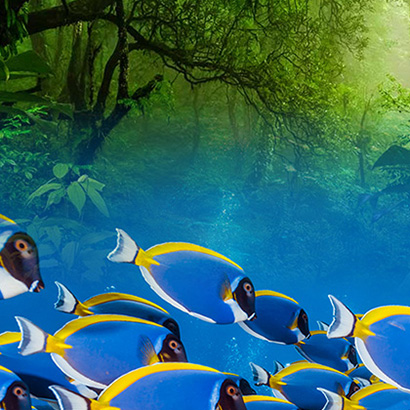
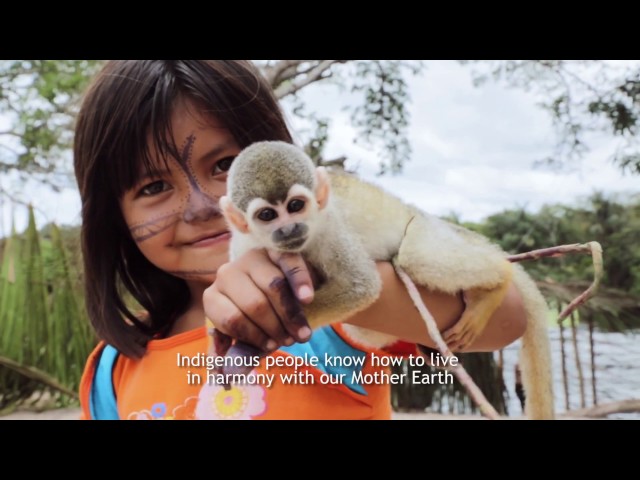
Amazon Watch defends indigenous rights and territories, vital for protecting the Amazon rainforest. Indigenous lands, holding 80% of global biodiversity, face constant threats from extractive industries seeking resources. If unchecked, the Amazon's Sacred Headwaters could become an oil field, and other regions destroyed by agribusiness and mega-dams.
We stand with indigenous allies to establish "No Go Zones" and champion Sarayaku's Kawsak Sacha (Living Forests) proposal, advocating to keep oil in the ground and expand this model across the Amazon, protecting areas like Yasuní National Park. Our international campaigns, including the Amazon Crude Campaign, reduce demand for destructive oil and expose harmful financiers. Learn more and join the movement at amazonwatch.org. Produced by Ecodeo.

Monitoring the vast amount of heat stored in Earth's warming oceans is challenging. Scientists at NASA's Goddard Space Flight Center are developing a novel satellite-based method using magnetic field observations to measure ocean heat content.
This technique leverages seawater's electrical conductivity, which changes with temperature. As conductive ocean water moves, it creates slight magnetic field fluctuations detectable by satellites. This approach promises the first global, all-depth ocean heat measurements from space.
Learn more: NASA Feature
Global sea levels are rising. NASA's Tom Wagner leads research, with scientists studying the Greenland Ice Sheet to understand this phenomenon. Explore NASA's sea level rise research here.
Thomas P. Wagner, NASA's Program Scientist for the Cryosphere, directs studies of Earth's polar regions, glaciers, sea ice, and their connection to climate change and sea level rise. Learn more about him here.

A new NASA study reveals significant global declines in microscopic ocean plant-life, or phytoplankton, which form the base of the marine food chain. This research is the first to analyze long-term phytoplankton community trends using NASA satellite data.
Diatoms, the largest type of phytoplankton, decreased over 1% annually from 1998 to 2012, particularly in the North Pacific, North Indian, and Equatorial Indian oceans. This reduction could impact the amount of atmospheric carbon dioxide absorbed and stored in the deep ocean. Dr. Cecile Rousseaux is featured.
This public domain video is available for download at http://svs.gsfc.nasa.gov/goto?12009.

Kayapó leaders Megaron Txukaramae and Raoni Metuktire, iconic figures of Brazil's Amazonian indigenous movement, address critical threats to their land. They highlight the importance of indigenous stewardship over the Amazonian landscape, particularly concerning draft bills that could weaken their control.
Survival International facilitated this public forum. For more information, visit Survival International.

Miriam Turner, Interface's Assistant VP of Co-Innovation, identified a unique opportunity. With 660 million people globally relying on oceans for livelihoods, many in poverty, she was inspired by Aquafil's recycling efforts to create an inclusive business model.
Her vision involved purchasing discarded fishing nets directly from local fishermen, providing them with vital extra income. This initiative would simultaneously clean beaches and oceans, benefiting both communities and the environment.
This concept was published by Interface Europe on September 3, 2013. More details can be found at www.interface.com/neteffect.

Beyond terrestrial climate change, oceans face significant threats. They absorb a quarter of all greenhouse gases, fundamentally altering their chemistry. This causes severe problems for marine ecosystems.
Such changes ultimately jeopardize the billions who depend on oceans for food and livelihood, diminishing their vital beauty. This information was published on March 23, 2015, by Grist, described as "a Beacon in the smog."
Explore more from Grist on YouTube.

This video features two excerpts from Mark Plotkin's speeches. His October 2014 TED Global talk in Rio de Janeiro addresses the critical endangerment of Amazonian indigenous cultures and uncontacted tribes, arguing they are the rainforest's most vulnerable species, not jaguars or eagles. Mark's Speech.
A second excerpt, from his August 2006 Authors@Google speech, emphasizes his view that protecting the earth is spiritually beneficial. Mark's August 2006 talk.
Published on December 1, 2014.

This film documents the Harakbut people's discovery of an enormous, ancient carved stone face in the Peruvian Amazon. This significant find could help prevent gold mining and petroleum companies from encroaching on their territories. Explore similar short films at If Not Us Then Who.
Produced by Handcrafted Films, this is one of many stories from over two years of participatory filming, articulating individual narratives from Indonesia to Peru.
These powerful visuals will be featured in a global roadshow leading up to COP21 in Paris. The initiative aims to draw attention to deforestation, promote community-based solutions, and pressure governments to commit to slowing climate change.

In an interview with Jungle Bird, Rebecca Moore, a computer scientist and software professional at Google, discussed her impactful work. She famously used Google Earth to halt the logging of over a thousand acres of redwoods in her Santa Cruz Mountain community.
Moore also initiated and leads the development of Google Earth Engine, a new technology platform supporting global-scale data-mining of satellite imagery for societal benefit. She holds a bachelor's degree in AI from Brown University, a master's from Stanford, and is on leave from a Stanford Ph.D. program. This interview was published on Sep 16, 2014.

Conservation Talks feature short clips from leading minds in conservation. In this installment, Dr. Jane Lubchenco, the first female administrator of the National Oceanic and Atmospheric Administration (NOAA), discusses what she sees as the biggest challenge facing conservation science in a rapidly changing world.
Dr. Lubchenco's rare resumé includes serving as the first female president of the International Council for Science, president of the American Association for the Advancement of Science and the Ecological Society of America, and a member of the National Science Board. She is also a Distinguished Professor of Zoology at Oregon State University, with academic residencies at institutions like Stanford and Harvard.

Marine biologist Jackie Savitz argues that restoring ocean health can help feed the planet's hungriest people. In an eye-opening talk, Savitz reveals the dire state of global fisheries and offers smart solutions to heal them, thereby increasing food supply for all.
As Vice President for U.S. Oceans at Oceana, Jacqueline Savitz brings a unique blend of marine biology, environmental toxicology, and two decades of policy experience. This background provides Oceana with sound scientific insight and a clear environmental vision.

Founder David Katz, Co-Founder Shaun Frankson, and plastics expert Mike Biddle were interviewed in Victoria, BC. They discussed The Plastic Bank's mission to reduce global poverty and plastic waste.
This interview was published on August 20, 2013.

Ancient Ireland revered its trees, imposing severe penalties for felling them. Why has this profound respect for our natural woodlands diminished?
The second episode of Eco Eye 2014, published January 14, 2014, explores efforts to save and restore native Irish woodlands and the biodiversity that once thrived there.
For additional resources, see Woodlands of Ireland and BirdWatch Ireland.

The Global Ocean Commission, an independent body of international leaders, launched in London on February 12. Its aim is to reverse ocean degradation and restore its full health and productivity.
Chaired by former Costa Rican President José María Figueres, South African minister Trevor Manuel, and former UK Foreign Secretary David Miliband, the Commission brings together senior political figures, business leaders, and development specialists from around the world.

On January 1, 2013, Shell's Kulluk drilling platform ran aground on Sitkalidak Island, Alaska, amidst 40 mph winds and 20-foot seas. A Coast Guard MH-60 Jayhawk helicopter crew overflew the scene, captured in a U.S. Coast Guard video by Petty Officer 1st Class Sara Francis.
This incident highlighted ongoing concerns about Arctic drilling. For further insight, read the Ocean Doctor blog post, "Lessons of BP Deepwater Horizon: Unlearned and Now Unleashed in Alaska."

The IPCC's April 2, 2014, "Summary for Policy Makers on Chapter Six, Oceans" report is available here.
Inspired by the World Resources Institute's Global Forest Watch, Ruth Ann Barrett of EarthSayers.tv developed OceansAdvocacy.com. This platform unites ocean advocates, offering access to databases, research, maps, and expert insights, including proponents of a circular economy. It fosters a whole systems approach to ocean sustainability.

Leaders in business, government, and conservation express support for Global Forest Watch (GFW), a dynamic online system empowering people to better manage forests.
Key supporters include Paul Polman (CEO, Unilever), Heru Prasetyo (Head of REDD+ Agency, Indonesia), and Dr. Jane Goodall (Founder, Jane Goodall Institute & UN Messenger of Peace).
This statement was published on Feb 20, 2014.

Ocean Elders was established to foster collaboration in ocean conservation.
Its distinguished members include Sir Richard Branson, Jackson Browne, Dr. Rita Colwell, Jean-Michel Cousteau, Dr. Sylvia A. Earle, Graeme Kelleher, Sven Lindblad, Her Majesty Queen Noor, Nainoa Thompson, Ted Turner, Captain Don Walsh, and Neil Young.

Captain Charles Moore of the Algalita Marine Research Foundation first discovered the Great Pacific Garbage Patch, an immense, floating accumulation of plastic waste.
He continues to raise awareness about the escalating and detrimental problem of plastic debris choking our seas.
Environmental Scientist and Advocate
What EarthSayers stands for
Discover Diverse Voices on EarthSayers
Unlike algorithm-driven platforms that push you into a content bubble, we ensure you hear a variety of perspectives from scientists, activists, Indigenous leaders, business innovators, and everyday citizens working toward sustainability.
EarthSayers CINEMA
Watch, learn and lead—sustainability starts with you.
The Thinking Game | Full documentary | Tribeca Film Festival official selection
“The Thinking Game” is the inside story of DeepMind's groundbreaking AI research, culminating in the Nobel Prize-winning AlphaFold breakthrough. Filmed over five years by the award-winning team behind "AlphaGo," this documentary explores co-founder Demis Hassabis's lifelong pursuit of artificial general intelligence and the rigorous scientific journey from mastering strategy games to solving the 50-year-old protein folding problem.
Following its world premiere at the Tribeca Festival, "The Thinking Game" is now available to watch for free. For those interested in hosting a screening for a classroom, community, or workplace, visit: rocofilms.com/films/the-thinking-game/.


