



Showing 20 search results of 5,118 videos found for
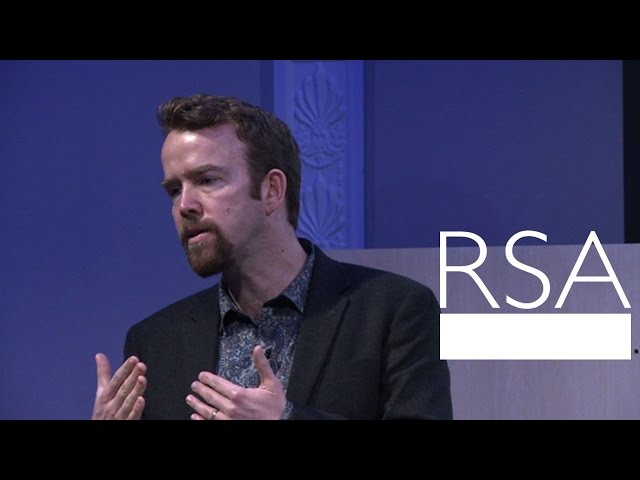
Jonathan Rowson, director of the Social Brain Centre at the Royal Society of Arts, highlights the problematic nature of the word 'spiritual.' It means too much to some and too little to others, leading to diverse interpretations—from psychological depth to philosophical confusion, or a critique of materialism to capitalist exploitation.
Following a two-year RSA inquiry, Dr. Rowson proposes a framework for a post-religious spirituality. This initiative seeks to make the spiritual less nebulous while maintaining its inclusive ambiguity.
The new framework redefines four existential touchstones: Love (from romance to rootedness), Death (from denial to confrontation), Self (from esteem to transcendence), and Soul (from substance to perspective).

Climate change and increasing raw material scarcity demand a radical shift from traditional business models. A circular economy is essential.
Businesses are uniquely positioned to lead this transformation by controlling waste, utilizing cleaner energy sources, and collaborating with NGOs and governments.
This concept was highlighted in an article published on May 14, 2013, by The Guardian.

An algal bloom has contaminated the water supply, leading to the deployment of the National Guard for assistance.
This critical situation was reported on August 3, 2014.
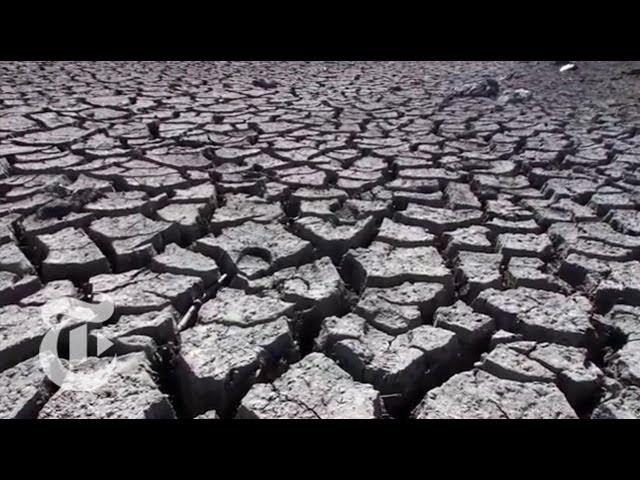
California is experiencing its worst drought on record. Learn about the crisis's severity and its impact on you.
Produced by Carrie Halperin and Sean Patrick Farrell, this story was originally published on July 7, 2014. Read the full article at the New York Times.

This work offers a radical rethinking of our faulty assumptions about money and its proper use.
It is authored by David Korten, a prolific writer whose upcoming book, "Change the Story: Change the Future," is slated for publication in 2015.

Mary Robinson is the former President of Ireland and a former United Nations High Commissioner for Human Rights.
She also serves as CEO of the Mary Robinson Foundation-Climate Justice.

Cree actor Gordon Tootoosis shares his personal beliefs in this video.
Published on November 15, 2011, by Blackstone First Nation. For more information, visit blackstonetheseries.com/first-nation.

Legendary producer and QI mastermind John Lloyd visited the RSA to discuss a profound insight from his extensive reading: our understanding is shaped by what we don't know.
This presentation was published on February 13, 2013.

John Lloyd, the mind behind QI and Blackadder, poses a fundamental question: what do we truly need to know? He challenges our understanding of essential knowledge, what to teach children, and whether intelligence is overrated. Watch his full talk, "General Ignorance," here.
Design and animation were created by TOGETHER. Learn more about the RSA, and follow them on Twitter and Facebook.
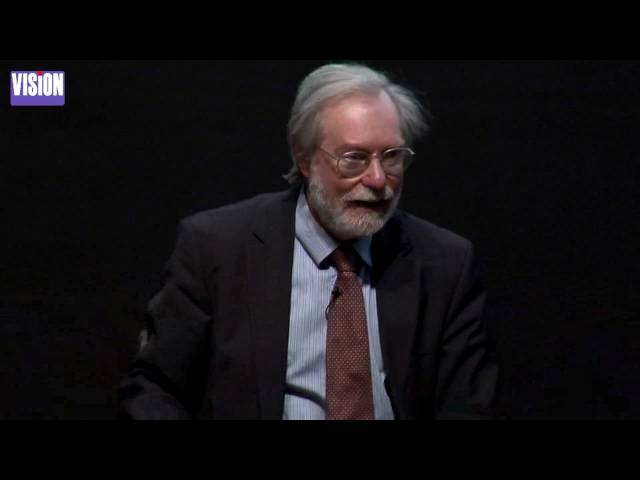
Award-winning economist Paul Collier explores how to reconcile economic growth with environmental sustainability. He argues against "plunder," where a few exploit many, taking resources that belong to future generations. Our obligation to the future is a fundamental principle.
His book, "The Plundered Planet," delves deeper into these ideas. Purchase it on Amazon or at your local bookstore. This content was produced by the RSA (Royal Society for the encouragement of Arts, Manufactures & Commerce).
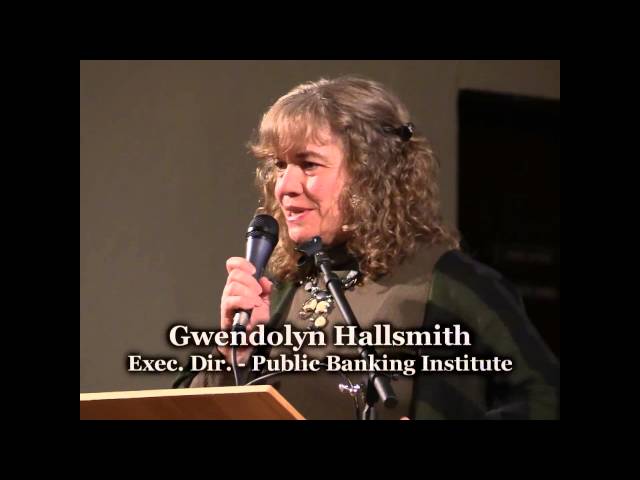
A public forum, "The Possibilities for a Public Bank in Seattle," recorded December 10, 2014, explored how residents could benefit from public banking. Moderated by Way ne Lau of Rainier Valley Community Development Fund, the event opened with Senator Bob Hasegawa emphasizing the long-term impact of such initiatives.
The distinguished panel included Council member Licata; Karl Beitel, Director of the Public Bank Project, who delivered an exceptional historical overview of public banking versus privatization; Dr. Thomas Keidel from the Federation of German Banks; and Gwendolyn Hallsmith, Executive Director of the Public Banking Institute and author of Creating Wealth: Growing Local Economies with Local Currencies.

A 60-second animation by the Royal Society and the US National Academy of Sciences explains climate science.
Over the last 200 years, human activities, primarily fossil fuel burning, have increased atmospheric CO2 by 40%. If unchecked, these emissions could warm the planet by 2.6°C to 4.8°C this century, posing serious threats to societies and nature.
For more information, read the full document 'Climate Change: Evidence & Causes' on the Royal Society website: https://royalsociety.org/policy/projects/climate-evidence-causes/

Garry Bowen discussed sustainability with Michael. For more information, visit Garry Bowen's LinkedIn profile.
This discussion was published on February 8, 2013.

Alejandro Aravena's architectural philosophy is to "bring the community into the process." Ten years ago, when tasked with building housing for 100 families in Chile, he found inspiration in favelas. Instead of small units in large buildings, he designed flexible "half-homes" that each family could expand. This complex problem found a simple solution through direct collaboration with the families themselves.
Aravena showcases three projects where clever rethinking led to beautiful, beneficial design. Learn more at Alejandro Aravena's website, or follow TED on Twitter and Facebook.

The film "Arctic Emergency: Scientists Speak On Melting Ice and Global Impacts" by Max Wilbert features climate scientists discussing the critical state of the Arctic in their own words.
Rising Arctic temperatures are causing sea ice to melt and permafrost to thaw, destabilizing a system vital to global climate, often called "Earth's Air Conditioner." This directly contributes to global warming, impacting weather patterns, natural systems, and human life worldwide, with the Arctic at the center of these profound changes.
Published on August 1, 2014, the film includes insights from leading experts such as Jennifer Francis (Rutgers University), Ron Prinn (MIT), Natalia Shakhova (University of Alaska-Fairbanks), Kevin Schaefer (National Snow and Ice Data Center), and others from prominent research institutions.

Published on Nov 17, 2014, an ultra-high-resolution NASA computer model, GEOS-5, offers a stunning new look at global carbon dioxide movement. This "Nature Run" simulation visualizes CO2 plumes swirling with winds, their dispersion from sources, hemispheric differences, and seasonal swings in concentrations due to plant growth cycles.
Developed by scientists at NASA Goddard Space Flight Center's Global Modeling and Assimilation Office, the model ingests real data on atmospheric conditions and emissions. It then simulates Earth's atmosphere, specifically for 2006. An updated version of this simulation was released to the scientific community in fall 2014. The video is public domain and available for download here.

This video features two excerpts from Mark Plotkin's speeches. His October 2014 TED Global talk in Rio de Janeiro addresses the critical endangerment of Amazonian indigenous cultures and uncontacted tribes, arguing they are the rainforest's most vulnerable species, not jaguars or eagles. Mark's Speech.
A second excerpt, from his August 2006 Authors@Google speech, emphasizes his view that protecting the earth is spiritually beneficial. Mark's August 2006 talk.
Published on December 1, 2014.

Mark Plotkin discussed his book, "Medicine Quest: In Search of Nature's Healing Secrets," at Google on August 29, 2006. This event was part of the Authors@Google series.
Dr. Plotkin's book is available from Amazon or your local bookstore.

Ethnobotanist Mark Plotkin argues that the most endangered species in the Amazon are its isolated tribes. In his energetic TED Talk, he reveals their profound medicinal plant knowledge and the urgent need to protect this irreplaceable wisdom from ongoing threats.
TEDTalks presents daily video podcasts featuring leading thinkers and doers sharing insights on technology, entertainment, design, science, and global issues in 18 minutes or less. Multilingual captions and subtitles are available at ted.com/translate.

This film documents the Harakbut people's discovery of an enormous, ancient carved stone face in the Peruvian Amazon. This significant find could help prevent gold mining and petroleum companies from encroaching on their territories. Explore similar short films at If Not Us Then Who.
Produced by Handcrafted Films, this is one of many stories from over two years of participatory filming, articulating individual narratives from Indonesia to Peru.
These powerful visuals will be featured in a global roadshow leading up to COP21 in Paris. The initiative aims to draw attention to deforestation, promote community-based solutions, and pressure governments to commit to slowing climate change.
Environmental Scientist and Advocate
What EarthSayers stands for
Discover Diverse Voices on EarthSayers
Unlike algorithm-driven platforms that push you into a content bubble, we ensure you hear a variety of perspectives from scientists, activists, Indigenous leaders, business innovators, and everyday citizens working toward sustainability.
EarthSayers CINEMA
Watch, learn and lead—sustainability starts with you.
The Thinking Game | Full documentary | Tribeca Film Festival official selection
“The Thinking Game” is the inside story of DeepMind's groundbreaking AI research, culminating in the Nobel Prize-winning AlphaFold breakthrough. Filmed over five years by the award-winning team behind "AlphaGo," this documentary explores co-founder Demis Hassabis's lifelong pursuit of artificial general intelligence and the rigorous scientific journey from mastering strategy games to solving the 50-year-old protein folding problem.
Following its world premiere at the Tribeca Festival, "The Thinking Game" is now available to watch for free. For those interested in hosting a screening for a classroom, community, or workplace, visit: rocofilms.com/films/the-thinking-game/.


