




Showing 20 search results of 5,118 videos found for

North Dakota Governor Jack Dalrymple activated the National Guard ahead of a ruling on the Standing Rock Sioux Tribe's lawsuit against the $3.8 billion Dakota Access pipeline. U.S. District Judge James Boasberg is set to rule on an injunction challenging the Army Corps of Engineers' permits, arguing violations of the National Historic Preservation Act.
Over 1,000 people from more than 100 Native American tribes have gathered near the Standing Rock Sioux Reservation to resist the pipeline's construction, marking the largest tribal unification in decades. An update is provided by Tara Houska, national campaigns director for Honor the Earth.
Democracy Now!, an independent global news program, covers this story and airs weekdays.

This trending story, "Climate Risk Disclosure V142," published on September 5, 2016, examines the evolution of risk disclosure thinking.
It explores the current state and future direction of climate risk disclosure practices.
For a deeper dive into this topic within the Climate Web, access the relevant section via this link: https://webbrain.com/u/19p7.
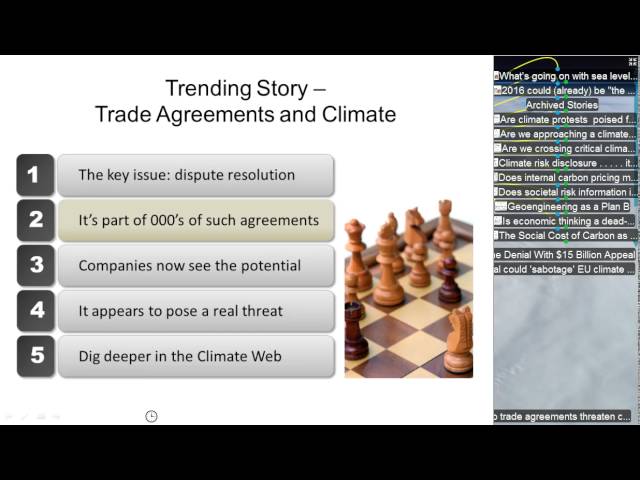
Dr. Mark Trexler, a Climate Change Risk expert, authored "Trade Agreements and Climate," a trending story exploring the growing concern over the environmental implications of international trade agreements. Originally published on September 5, 2016, this piece offers a concise review of the topic.
The full story is available via email subscription through the Climatographer website. For deeper exploration within the Climate Web, additional resources can be accessed via this link.

Published on September 5, 2016, "Trending Story - Social Cost of Carbon V143" is an email by climate change risk expert Dr. Mark Trexler.
This issue introduces the social cost of carbon as an environmental concern and explains how to explore it further in the Climate Web. Access Dr. Trexler's subscription emails here. To jump directly to the referenced Climate Web content, use this link.
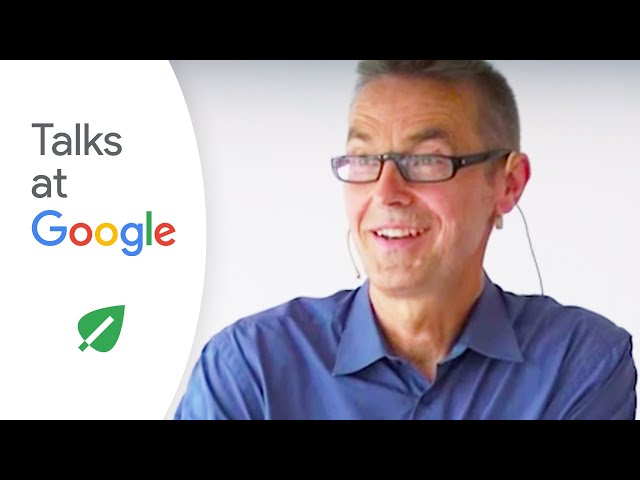
Published on August 29, 2016, by Google Talks, this features Otto Scharmer. He is a Senior Lecturer at MIT, co-founder of the Presencing Institute and the Global Wellbeing Lab, and chairs the MIT IDEAS program.
Scharmer introduced the concept of "presencing"—learning from the emerging future—in his bestselling books *Theory U* and *Presence*.
To order his book, *Theory U*, visit Amazon or your local bookstore.

Economist and writer Christian Felber presents his "Economy for the Common Good" initiative. He explores whether businesses can achieve both endless growth and be fair and sustainable, and if an economic model untainted by our current financial system is possible. Learn more about Felber's work and his book Felber Book on Common Good.
Launched in 2010, the 'Economy for the Common Good' is now supported by over 2000 businesses across 40 countries. It aims to create systemic change by awarding legal benefit points to socially responsible companies, encouraging their pursuit of the common good. Felber demonstrates how this shift can be achieved, and his book "Change Everything" is available for purchase.

NASA analyses indicate that two key climate change indicators broke multiple records in the first half of 2016. Each of the first six months of 2016 was the warmest globally since modern temperature records began in 1880.
Furthermore, five of these months recorded the smallest Arctic sea ice extent since consistent satellite records started in 1979. NASA researchers are currently collecting additional data to better understand our changing climate.

Published on Jan 20, 2016, this visualization illustrates Earth’s long-term warming trend from 1880 to 2015, using a rolling five-year average. Orange colors represent temperatures warmer than the 1951-80 baseline, while blues indicate cooler temperatures.
Credit: NASA Goddard Space Flight Center's Scientific Visualization Studio. This public domain video is available for download here.
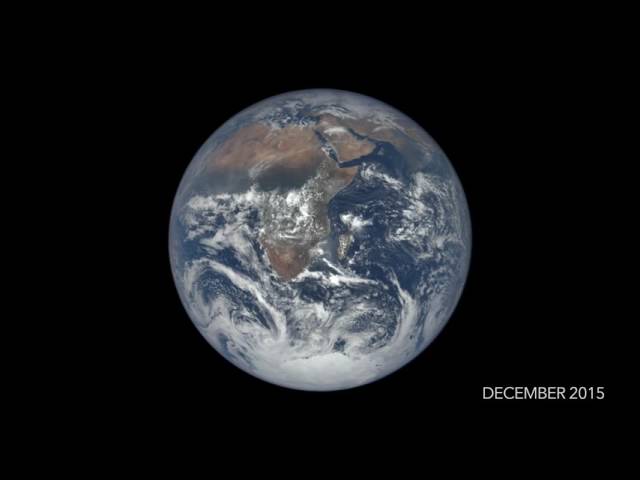
On July 20, 2015, NASA's EPIC camera on NOAA's DSCOVR satellite captured its first image of Earth's sunlit side. From its orbit one million miles away, EPIC has now completed a full year of observations, taking a new picture every two hours. These images reveal our planet's ever-changing clouds, weather systems, and fixed features like deserts, forests, and seas, while also allowing scientists to monitor atmospheric ozone, aerosols, and vegetation properties.
DSCOVR, a partnership between NASA, NOAA, and the U.S. Air Force, primarily maintains real-time solar wind monitoring capabilities. This is crucial for accurate space weather alerts and forecasts. For more information about DSCOVR, visit: http://www.nesdis.noaa.gov/DSCOVR/
Credit: NASA's Goddard Space Flight Center/Kayvon Sharghi

Oregon Governor Kate Brown recently spoke with Climate One.
During the discussion, she identified coal and cars as the state's two primary sources of greenhouse gas emissions.

Professor Bruce Hood argues that the 'self' is merely a brain-generated construct. He explains how the brain creates this "character" to weave our internal processes and experiences into a coherent narrative.
This insightful discussion was published by The RSA on June 5, 2013.

Published on Jun 26, 2016.
An interview with David Daley, Editor-in-Chief at Salon and author of "Ratf**ked: The True Story Behind the Secret Plan to Steal America's Democracy."
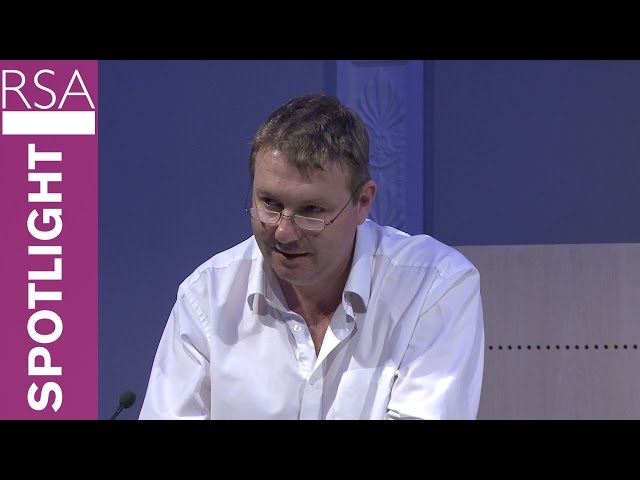
The RSA presented "The Inequality Debate" with Danny Dorling. This discussion explores whether London's economic success justifies growing inequality, and if the city can maintain economic efficiency amidst such disparities.
Watch Professor Dorling, from the University of Oxford, in the latest RSA Spotlight – an edited highlight of the event. For the full replay, click here.

Can shopping truly save the world? *The Story of Change* challenges this notion, urging viewers to reconsider their consumer habits.
It advocates for exercising "citizen muscles" to build a more sustainable, just, and fulfilling world, emphasizing collective action over credit card spending.
Discover more at http://storyofchange.org.

Renewable energy sources are abundant and readily available. Given this potential, why do we continue to rely on fossil fuels?
This 2-minute animation explores how we can transition to a world powered entirely by 100% renewable energy.

We must reimagine Earth's organization. The future is driven by mega-cities and connectivity, not countries and borders, where the most connected powers and people will thrive.
Leading strategist Parag Khanna explains how the global connectivity revolution—across transport, infrastructure, and communications—has upended the 'geography is destiny' mantra. He asserts that connectivity, not sovereignty, is the organizing principle of 21st-century society.
Explore the Connectivity Atlas.

Esau Sinnok, an emerging climate leader from Shishmaref, Northwest Alaska, is fighting to protect his community's centuries-old way of life. As essential ice melts and his home faces threats, he refuses to stand by. Join Esau in the fight to keep dirty fuels in the ground.
For more insights, watch NASA's video, The Greening of Arctic, on EarthSayers.tv, Voices of Sustainability.

NASA scientists utilized 30 years of Landsat satellite data to track vegetation changes across 4 million square miles of Alaska and Canada. Their findings reveal a significant "greening" trend, with 30% of the area showing increased vegetation, while only 3% experienced "browning."
This pioneering study, the first to provide continent-scale detail alongside local information, underscores the impact of rapid Arctic warming. Elevated temperatures lead to extended growing seasons and altered soils, transforming tundras into shrublands. Future research will investigate local factors influencing these greening patterns and explore forested regions.
For more information, visit NASA's feature page. The full study is available online.

Many conservatives believe government's core purpose is to protect rights to life, liberty, and property. If greenhouse gas emissions threaten these fundamental rights, then government has a clear duty to act against such a threat.
Niskanen Center President Jerry Taylor will discuss the conservative and moral imperative for addressing climate change, outlining how effective solutions can be implemented.

Sabbath Economics is an economic practice rooted in the belief that there are sufficient resources for all. It recognizes our fundamental role as economic beings interacting with creation's resources for survival and flourishing.
A key tenet is debt forgiveness, viewed as biblical, just, and healing. This approach aims to narrow the divide between the wealthy and the poor.
Explore Sabbath Economics further at sabbatheconomics.org. Additional insights are available in these clips: Clip 2 and Clip 3.
Environmental Scientist and Advocate
What EarthSayers stands for
Discover Diverse Voices on EarthSayers
Unlike algorithm-driven platforms that push you into a content bubble, we ensure you hear a variety of perspectives from scientists, activists, Indigenous leaders, business innovators, and everyday citizens working toward sustainability.
EarthSayers CINEMA
Watch, learn and lead—sustainability starts with you.
The Thinking Game | Full documentary | Tribeca Film Festival official selection
“The Thinking Game” is the inside story of DeepMind's groundbreaking AI research, culminating in the Nobel Prize-winning AlphaFold breakthrough. Filmed over five years by the award-winning team behind "AlphaGo," this documentary explores co-founder Demis Hassabis's lifelong pursuit of artificial general intelligence and the rigorous scientific journey from mastering strategy games to solving the 50-year-old protein folding problem.
Following its world premiere at the Tribeca Festival, "The Thinking Game" is now available to watch for free. For those interested in hosting a screening for a classroom, community, or workplace, visit: rocofilms.com/films/the-thinking-game/.


