




Showing 20 search results of 5,118 videos found for

This publication, from the City of Portland's Bureau of Planning and Sustainability, offers a brief introduction to Portland's diverse neighborhoods.
It highlights the unique character of each area.
Originally posted in December 2014.

NASA and National Oceanic and Atmospheric Administration (NOAA) reports confirmed that last year was Earth's warmest on record. Their analysis also shows that, with the exception of 1998, the ten warmest years have all occurred since 2000.
Since record-keeping began in 1880, Earth's average surface temperature has risen by approximately 1.4 degrees Fahrenheit (0.8 degrees Celsius). This warming trend is primarily attributed to increased carbon dioxide and other human-caused emissions into the atmosphere.
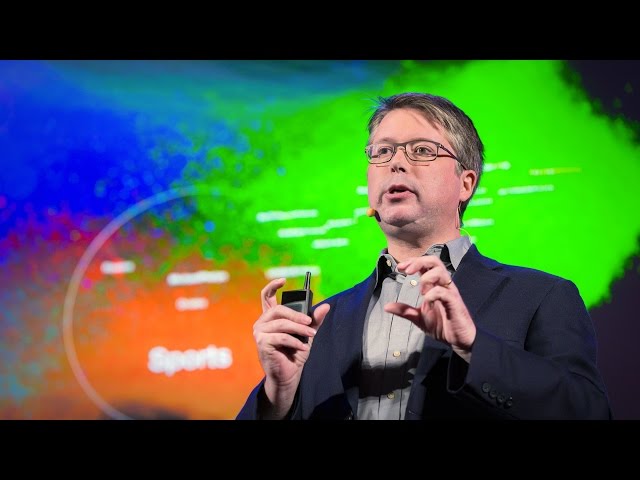
Every city has its unique social fabric. Dave Troy visualizes Twitter data from his hometown, Baltimore, to reveal these hidden lines—who talks to whom and who doesn’t. His work explores what online sharing tells us about urban communities.
TEDTalks provides daily video podcasts featuring leading thinkers and doers from the TED Conference. These talks cover a wide range of topics, including Technology, Entertainment, Design, science, business, and global issues. Find closed captions and translated subtitles here.

Earlier this month, Congress passed a measure within the 2015 defense bill to transfer sacred American Indian lands in Arizona to a foreign company.
Bill Moyers interviewed Robert A. Williams Jr., a professor of American Indian law, who explained how such land deals continue a tragic history of dispossession for American Indians.
Published on December 26, 2014.

Doug Fine is a best-selling author, comedic investigative journalist, and solar-powered goatherder. He has reported from five continents for major outlets including the Washington Post, New York Times, Wired, and NPR. A former New Yorker, he now lives at the Funky Butte Ranch in Silver City, New Mexico.
At TEDx ABQ in September 2013, Fine discussed the "I-gene," our indigenous connection to nature. He emphasized the importance of getting outdoors to awaken this gene, enabling us to thrive in both the natural and digital worlds.

Anndrea Herrmann, President of the Hemp Industries Association, was interviewed by the Investing News Network on May 16, 2014. She discussed hemp regulations and the challenges her organization faces.
Herrmann elaborated on hemp regulations in the United States and globally, addressing difficulties in public education. She also provided an overview of hemp's many interesting uses.
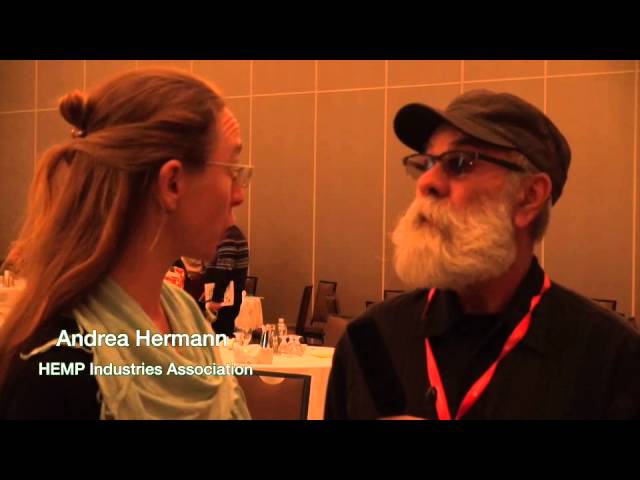
This spirited interview features U.S. Hemp Industry pioneers at the Canadian Hemp Trade Alliance (CHTA/ACCC) National Hemp Convention, "Hemp 2014: Paving the Way," held November 16-19, 2014, in Delta Winnipeg.
Interviewer Edgar Winters (Oregon Agriculture & Food Rural Consortium & COO of Natural Good Medicines) speaks with Anndrea Hermann and Doug Fine. Hermann, President of the Hemp Industries Association and Oregon State University professor, discusses building a "solid legitimate industry" through agronomy and global partnerships. Journalist and hemp advocate Fine highlights sustainability and a community-based tri-cropping blueprint from his book, Hemp Bound. This essential conversation should not be missed.
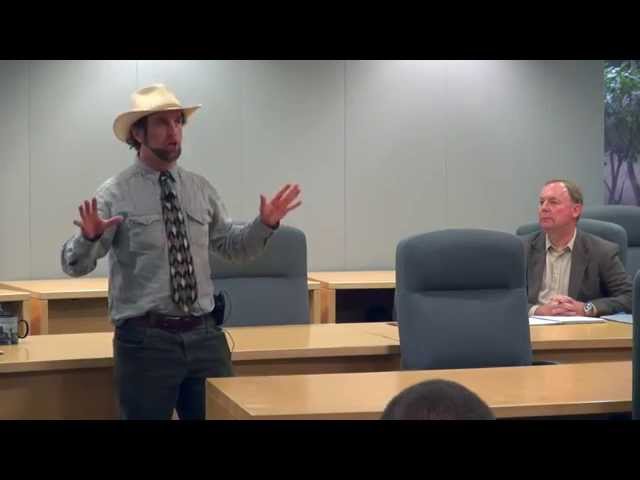
Published on January 11, 2015, this video documents a presentation given on January 6, 2015, in Salem, Oregon, USA.
An author, journalist, and hemp advocate addressed the Oregon Department of Agriculture. The video was produced by Barry Heidt.
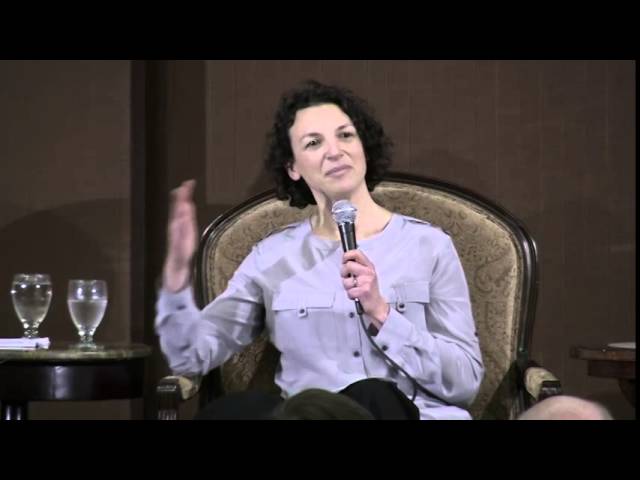
Streamed live on January 9, 2015, this forum on "Healthcare & Homelessness" discussed City Club's new report and critical community issues.
The event explored how to maximize health benefits for Multnomah County's homeless population through healthcare reform and Oregon Health Plan expansion. Homelessness is a complex public health challenge where the struggle for stability often overshadows health needs, exposing deep fault lines in our current healthcare system.
Panelists included Crista Gardner, David Labby, Leo Rhodes, and Rachel Solotaroff.

An upcoming forum will address what's working, what's not, and potential improvements for homelessness by next year. Panelists include Multnomah County Chair-Elect Deborah Kafoury, Portland City Commissioner Dan Saltzman, Suzanne Hayden (Citizens Crime Commission), Traci Manning (Portland Bureau of Housing), Matt Morton (Native American Youth and Family Center), and Leo Rhodes (Street Roots). KGW's Reggie Aqui will moderate.
This initiative builds on past efforts, such as Nan Roman's (National Alliance to End Homelessness) April 4th presentation on causes and solutions. A City Club research committee is also studying how Multnomah County's homeless population can benefit from healthcare reforms, with results due in January. The City Club of Portland has dedicated 2014 to finding practical solutions to end local homelessness through research, advocacy, and public forums.

Portland is experiencing an unprecedented architectural boom, impacting citizens across many neighborhoods. While the city's Design Review process evaluates new buildings, its most stringent oversight applies only to downtown and a few inner districts.
A panel will explore how Design Review functions, its effectiveness, and potential expansion city-wide. Experts Michael McCullouch, Guenevere Millius, and John Russell will share insights, with Randy Gragg moderating the discussion.

As Portland revitalizes its Old Town/Chinatown, a neighborhood home to two National Historic Districts, there is renewed interest in preserving its architecture and reusing historic buildings. This panel will address the challenges of redeveloping these structures, explore better financial tools and incentives, suggest in-fill considerations, and discuss streamlining processes to attract private investment and restore buildings to full service.
Speakers include Brian Emerick (Emerick Architects), Julie Garver (Innovative Housing), Jeff Joslin (City and County of San Francisco), Peggy Moretti (Restore Oregon), and Ethan Seltzer (Portland State University). Chet Orloff (Pamplin International Collection of Art) will moderate the discussion.

Five activists provided a Washington D.C. legislative update on industrial hemp at Hemfest 2013. Doug McVay narrated the session, featuring panelists Steve Levine, Dave Seber, Adam Eidinger, David Bronner, and David Pillar.
More information from the event can be found at Hemfest 2013.

Environmental protection agencies, created to regulate polluting industries, have been compromised. These bodies, meant to safeguard our environment, have been "hijacked" by the very industries they were designed to oversee.
Legal scholar Mary Christina Wood tells Bill Moyers that our judicial system, along with future generations, may ultimately be our best hope. She suggests they will save us from ourselves.
Environmental protection agencies, designed to regulate polluting industries, have been compromised. Legal scholar Mary Christina Wood suggests that the judicial system and future generations may ultimately save us.
Wood shared this perspective with Bill Moyers, emphasizing the need for intervention beyond current regulatory bodies. (Published January 2, 2015)

On March 31, 2014, the Tennessee House of Representatives overwhelmingly approved a bill to establish a state licensing program for legal hemp cultivation. Sponsor Rep. Jeremy Faison emphasized hemp's historical benefits and cited the recent U.S. Farm Bill, which permits states to regulate production and allows universities to conduct studies.
The legislation passed with an 88-5 vote. Following its approval, Faison distributed various hemp products, such as breakfast cereal, soap, cooking oil, and twine, to legislative leaders, showcasing the plant's diverse applications.

Hemp transforms into textile fiber through a multi-stage process. Initially, harvested hemp stalks undergo retting, where moisture and microbes break down pectin, separating the long bast fibers from the woody core. This crucial step can occur naturally in fields (dew retting) or in controlled water tanks.
Following retting, mechanical decortication further separates and cleans the fibers. These refined fibers are then scutched and hackled to align them, preparing them for spinning. Finally, the processed hemp fibers are spun into yarn, which is subsequently woven or knitted into durable textiles.

"Billion Dollar Crop," a 1994 Australian documentary, explores the history, diverse uses, and future of cannabis, focusing on the versatile and potentially revolutionary plant's potential.
The film highlights how recently developed, non-drug hemp varieties are being researched and cultivated globally for their versatile qualities and environmental benefits. It showcases hemp as an industrial fiber, offering alternatives to wood for paper, cotton for clothes, and plywood for construction, thereby benefiting forests and topsoil.
Produced with Michael Cordell and Jeffrey Bruer, and directed by Barbara Ann Chobocky, the DVD is available from Bull Frog Films.

This short film explores hemp, often called a miracle plant. Discover how this remarkable land plant could significantly benefit humanity and the planet.
It also investigates why most hemp used in U.S. products is imported, not domestically grown.
Uploaded Aug 1, 2010.

Recycle your old electronics responsibly instead of discarding them. These devices contain valuable materials, and recycling them is an easy way to reduce your environmental footprint and potentially earn some cash.
This initiative, "Recycle Electronics Responsibly," was produced by Molly Wood and Rebekah Fergusson for The New York Times. Read the full story here.
Environmental Scientist and Advocate
What EarthSayers stands for
Discover Diverse Voices on EarthSayers
Unlike algorithm-driven platforms that push you into a content bubble, we ensure you hear a variety of perspectives from scientists, activists, Indigenous leaders, business innovators, and everyday citizens working toward sustainability.
EarthSayers CINEMA
Watch, learn and lead—sustainability starts with you.
The Thinking Game | Full documentary | Tribeca Film Festival official selection
“The Thinking Game” is the inside story of DeepMind's groundbreaking AI research, culminating in the Nobel Prize-winning AlphaFold breakthrough. Filmed over five years by the award-winning team behind "AlphaGo," this documentary explores co-founder Demis Hassabis's lifelong pursuit of artificial general intelligence and the rigorous scientific journey from mastering strategy games to solving the 50-year-old protein folding problem.
Following its world premiere at the Tribeca Festival, "The Thinking Game" is now available to watch for free. For those interested in hosting a screening for a classroom, community, or workplace, visit: rocofilms.com/films/the-thinking-game/.


