




Showing 20 search results of 5,118 videos found for

Published by McKinsey & Company on January 17, 2016, this article explores how technology-driven trends will revolutionize industry responses to evolving consumer behavior, partnership development, and transformational change.
For more details on these disruptive trends, particularly within the auto industry, visit the full report here.

Alejandro Aravena, tasked with building housing for 100 families in Chile, found inspiration in favelas and slums. Rather than conventional small units, he designed flexible "half-homes" that families could expand. This innovative, simple solution arose from direct collaboration with the families themselves.
Aravena presents three projects demonstrating how clever rethinking leads to beautiful, beneficial design. He emphasizes, "With the right design, sustainability is nothing but the rigorous use of common sense."
Find closed captions and translated subtitles for this talk at ted.com/translate.

Published January 14, 2016, Jessica M. Vaughan, Director of Policy Studies for the Center for Immigration Studies, stated, "Our compassion has to be backed up by our wallets," discussing the financial implications of aiding Syrian refugees.
Watch the full Intelligence Squared US debate here.

Hector De La Torre from the Air Resources Board discussed with Climate One how evolving generations are changing their vehicle use.
This discussion was published by Climate One on January 14, 2016.
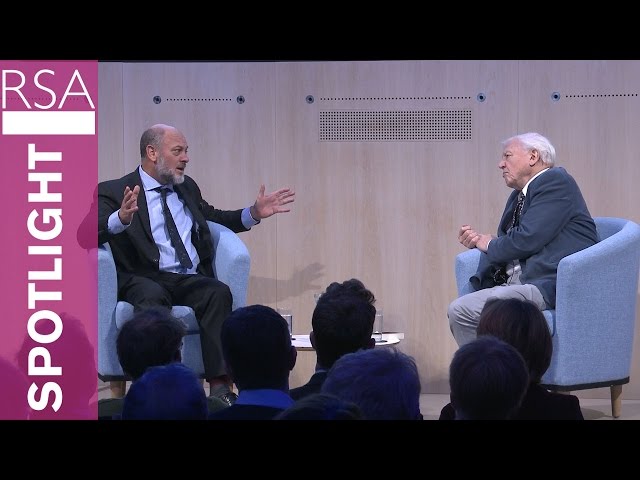
The RSA was thrilled to host Sir David Attenborough and explorer/conservationist Tim Flannery.
They spoke passionately about the era-defining issue of climate change.

We spoke with guest editors Stephan Lewandowsky, Chair in Cognitive Psychology at the University of Bristol, and Richard Pancost, Professor of Biochemistry. They discussed their contributions to *Philosophical Transactions*.
Their work explores the complex relationship between scientific uncertainty regarding climate change and knowledge drawn from physical, economic, and social perspectives. This interdisciplinary examination offers valuable insights into a critical global issue.

International law currently recognizes four major crimes: war crimes, genocide, torture, and crimes against humanity. However, Spanish magistrate Baltasar Garzón and Scottish lawyer Polly Higgins advocate for expanding this list to include a fifth: ecocide.
They aim to establish ecocide as an international crime, thereby placing the large-scale destruction of ecosystems high on the global political agenda. This initiative was highlighted by VPRO Backlight on November 30, 2015.

Shell is preparing another attempt to extract an estimated 400 billion barrels of oil and gas from the Arctic. However, drilling in this region is expensive and dangerous.
Falling oil prices and potential government action could jeopardize Shell's ambitions in the face of these significant challenges.
For further reading, see This Changes Everything by Naomi Klein here. Published by The Guardian on July 16, 2015.
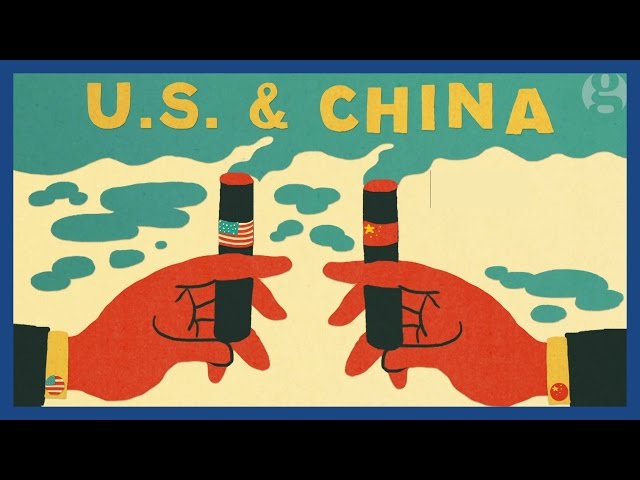
Governments from over 190 nations will convene at the UN 2015 Paris Climate Conference (November 30 – December 11) to forge a new global agreement on climate change.
This year's summit holds greater promise than the unsuccessful 2009 Copenhagen meeting. Optimism stems from the growth of renewable energy and evolving stances among major polluters, including the US.
For further reading, visit the Guardian website. Explore related videos: "Could Arctic oil drilling save the climate?" Watch here and "Naomi Klein: This Changes Everything" Watch here.

This Royal Society animation introduces key concepts of unconscious bias. It aims to educate members of selection and appointment panels on recognizing bias in themselves and others, understanding diverse candidate presentations, and identifying inappropriate advocacy or unreasoned judgment.
For more information on unconscious bias, including current academic research, download a briefing at www.royalsociety.org/diversity.

This "Innovate and Inspire" presentation, published on November 6, 2015, features Sandra Postel.
Postel is the Director of the Water Policy Project and a Freshwater Fellow with the National Geographic Society.

Denise Morrison, President and CEO of Campbell Soup Company, delivered a plenary address at the BSR Conference 2015 in San Francisco, CA.
This address was published on November 6, 2015. Learn more about Denise Morrison.

Ellen MacArthur delivered a special presentation on the circular economy.
This occurred at the BSR Conference 2015, held in November 2015 in San Francisco, California.

Award-winning FT columnist and author Gillian Tett investigates the pervasive issue of organizational silos. She explores why we create them and how to break free.
At the RSA, Tett lays bare the perils of the "silo effect." She explains how individuals and institutions can overcome these barriers to foster more effective, productive, and creative thinking and action.

Despite China's pledge to cap and reduce carbon emissions, coal production continues to grow. This creates difficult choices for those who work in and live near the mines.
Published by the New York Times on November 4, 2015, this content is available on their YouTube Channel.

Raj Patel, author of *The Value of Nothing*, critiques the free market's impact on freedom and resource management. He argues that prices often mislead us, revealing "hidden costs" that distort true value. For instance, a hamburger's real price could be $200 when factoring in environmental and health expenses.
Patel, an activist and academic, suggests Nobel laureate Elinor Ostrom's concept of collaborative governance, known as "the commons," offers a better alternative for resource management than the current free market system. Visit Raj Patel's website: rajpatel.org.

The University of Chicago Wisdom Research Forum 2014, published August 6, 2014, featured three lectures. Jason Swartwood, a philosophy doctoral candidate at the University of Minnesota, explored how wisdom is defined and recognized.
Sayuri Hayakawa from the University of Chicago Psychology Department discussed how bilingualism and language influence cognition. She noted that a lack of expertise can sometimes enhance creativity and lead to wiser decisions.
Guilherme Albieri of SUNY presented on wisdom's relationship to academic and clinical success. He highlighted that wise individuals possess superior self-regulatory and interpersonal skills, which mediate their interaction with the environment.

This excerpt features an interview with Aleut elder Larry Merculieff from the Native Perspectives on Sustainability project. Merculieff critiques the term "sustainability," advocating for humanity's inherent intelligence to live in alignment with all creation.
This series, "Native Perspectives on Sustainability," is produced by David Hall of Portland State University.

This panel discussion, presented on November 4, 2005, and published April 9, 2015, examines Portland's evolving approach to homelessness. It contrasts Mayor Bud Clark's 1985 "12-Point Plan" with the city's 2005 "10-Year Plan to End Homelessness," questioning how strategies have changed and why new outcomes are anticipated.
Moderated by Gretchen Kafoury (former city commissioner and Portland State University faculty), the panel featured three key community leaders. Erik Sten, City Commissioner, discussed the city's program. Genevieve Nelson, co-founder of Sisters of The Road, shared insights from a survey of 400 homeless individuals. Lisa Schroeder, a business owner and co-chair of the Downtown Retail Council, provided the downtown business perspective.

Published on January 29, 2015, an article in The New York Times titled "Oil Prices and the 'Spectrum of Pain'" examines the global impact of plummeting crude oil prices.
The piece investigates why some nations are faring significantly better than others, despite crude oil falling over 50% since last summer.
Environmental Scientist and Advocate
What EarthSayers stands for
Discover Diverse Voices on EarthSayers
Unlike algorithm-driven platforms that push you into a content bubble, we ensure you hear a variety of perspectives from scientists, activists, Indigenous leaders, business innovators, and everyday citizens working toward sustainability.
EarthSayers CINEMA
Watch, learn and lead—sustainability starts with you.
The Thinking Game | Full documentary | Tribeca Film Festival official selection
“The Thinking Game” is the inside story of DeepMind's groundbreaking AI research, culminating in the Nobel Prize-winning AlphaFold breakthrough. Filmed over five years by the award-winning team behind "AlphaGo," this documentary explores co-founder Demis Hassabis's lifelong pursuit of artificial general intelligence and the rigorous scientific journey from mastering strategy games to solving the 50-year-old protein folding problem.
Following its world premiere at the Tribeca Festival, "The Thinking Game" is now available to watch for free. For those interested in hosting a screening for a classroom, community, or workplace, visit: rocofilms.com/films/the-thinking-game/.


