




Showing 20 search results of 5,118 videos found for

Discover five of the ocean's most bizarre creatures. Explore our [Marine Life Encyclopedia](https://bit.ly/34VjXkO) for more fascinating insights.
Join our community by subscribing to our channel. Stay connected with us on [Instagram](https://www.instagram.com/oceana/), [Twitter](http://twitter.com/oceana), and [Facebook](https://www.facebook.com/oceana/).

Nate Liebenberg, co-founder of idiveblue.com, champions awareness regarding the severe impact of throwaway plastics. These pollutants devastate marine species, contaminate our precious waters, and ultimately endanger human well-being.
Join us for a crucial discussion on ocean conservation and discover how we can collectively safeguard these vital ecosystems.

Yale's Climate Change Communication research challenges common assumptions about American climate beliefs, revealing broad support for climate policies across the country. Their findings offer insights for anyone interested in public opinion on climate change.
Join Dr. Jennifer Marlon in a webinar to explore customizable Climate Opinion Factsheets. These tools help users understand public support for climate policies in specific states, congressional districts, and counties.
Access related resources, including Political Comparison Maps, Custom Factsheets, Opinion Maps, and Presentation Slides. For more reports or to join their mailing list, visit climatecommunication.yale.edu or contact them at climatechange@yale.edu.

Released August 29th, 2020, this podcast episode explores the powerful role of art in understanding and processing climate change. Listen here: Art and Identity in a Time of Climate Change.
Guests include poet Clara Fang, who shares her work and discusses poetry's connection to nature. Photographer and writer Princella Talley highlights art's vital role in her life and addresses challenges for people of color in climate spaces. Dr. Krista Hiser, a professor, differentiates climate fiction from science fiction, advocating for more constructive climate conversations beyond apocalyptic narratives.
Share your thoughts via voicemail at 518.595.9414 or email radio@citizensclimate.org. Find us on major podcast platforms and connect with other listeners on social media @CitizensCRadio.

Great white sharks, powerful apex predators, face extinction risk. New research indicates they are among one-third of marine megafauna species threatened over the next century. Worst-case projections suggest 62% of shark species could be lost.
Join our community of Wavemakers by subscribing to our channel.
Stay connected:
[Instagram](https://www.instagram.com/oceana/)
[Twitter](http://twitter.com/oceana)
[Facebook](https://www.facebook.com/oceana/)

Leopard slugs exhibit a beautifully bizarre mating ritual. Each hermaphroditic individual, preferring coupling over self-fertilization, climbs a tree or rock at night. They then lower themselves on a mucus tether, entwining their bodies. Gravity assists in deploying their oversized penises, which emerge from the right side of their heads.
Once coitus is complete, both slugs ascend the mucus tether, with the one bringing up the rear consuming it. Learn more about this fascinating process at the BBC. Footage for such observations is often provided by sources like Bernoid.com.

Triggerfish are named for their unique dorsal fin, which locks upright for protection. The large first spine is secured by the second, and can only be lowered when the second spine is pulled back, much like a trigger. Learn more about these fascinating fish here.
Join our community of Wavemakers by subscribing to our channel! 🌊 Stay connected with us on social media: Instagram @oceana, Twitter @oceana, and Facebook Oceana.

Sir Ken Robinson's "Finding Your Element" guides individuals to discover their passions and purpose. He asserts that "To be in your element you have to love it," offering principles and tools to help people find work they enjoy, leading to contentment.
Robinson believes strategic changes in personal and professional life are possible as one finds their element. This program was produced by Michael Rose for American Public Television.

Join Michael Gerrard, Columbia Law School professor and Sabin Center Director, for a training on Legal Pathways to Deep Decarbonization. His team's "legal playbook" identifies over 1,000 model laws to help the U.S. achieve an 80% reduction in greenhouse gas emissions by 2050.
Gerrard will outline needed federal, state, and local legal changes and demonstrate how CCL volunteers can engage legislators with these model laws. The training covers key topics like legal tools and mobilizing pro bono lawyers.
For more information, visit: Join CCL, Model Laws for Deep Decarbonization, and Legal Pathways to Deep Decarbonization.
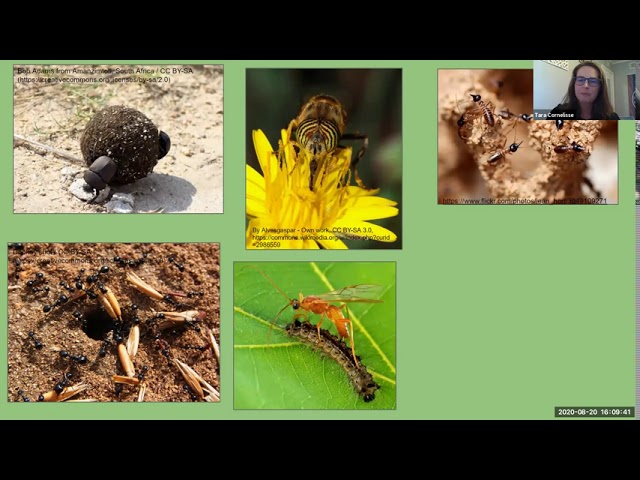
Insect populations, from monarchs to bumble bees, are rapidly declining worldwide due to pesticides, development, and other threats. These vital creatures are essential for healthy ecosystems and human well-being.
Join our upcoming "Saving Life on Earth" webinar to learn about the "Saving the Insects" campaign and how you can help. Center senior scientists Tara Cornelisse and Tierra Curry will present.

Craig Santos Perez is a Professor in the English Department at the University of Hawaii, Manoa. He specializes in creative writing, eco-poetry, and Pacific literature, and is affiliate faculty with the Center for Pacific Islands Studies and the Indigenous Politics Program.
Perez's leadership roles include serving as Chair of the Hawaiian, Asian, and Pacific Islander Board (2017-2020) and as Director of the Creative Program (2014-2016, 2019-2020).

The discussion underscored the critical importance of human connection. Our minds naturally foster honor, respect, and good treatment towards those we feel connected with, a principle evident in our daily group interactions.
However, we have allowed divisiveness and fear to turn us against each other. The imperative now is to expand this sense of connection beyond our immediate circles, embracing a larger group: one humanity.

Video courtesy of the Omega Institute.
Anthony Kapel "Van" Jones (born September 20, 1968) is an American news commentator, author, and non-practicing attorney. He co-founded several nonprofit organizations, including the Dream Corps, a "social justice accelerator" that operates three advocacy initiatives: #cut50, #Yeswecode, and Green for All.

The Kashia Band of Pomo Indians, a federally recognized tribe also known as the Kashaya Pomo, resides in Sonoma County, California. Their reservation, Stewarts Point Rancheria, is located in Stewarts Point.
The tribe's success in securing a private deed and management rights to their ancestral lands may be the first such achievement by a U.S. tribe. For more information, visit [Trust for Public Lands](https://www.tpl.org/our-work/kashia-coastal-reserve).

The bull shark is a large predatory species, reaching 11 feet and nearly 700 pounds. Unique among sharks, it thrives in both coastal seas and freshwater environments like rivers and lakes. It belongs to the requiem shark family (Carcharhinidae).
Learn more in our Marine Life Encyclopedia. Stay connected with us: Instagram, Twitter, and Facebook.

University Senior Lecturer Tyson Yunkaporta, an Indigenous person and member of the Apalech Clan, explores how Aboriginal perspectives can provide the paradigm shift needed to address global challenges. From his unique viewpoint, deeply tied to the natural and spiritual world, he raises important questions about how contemporary life diverges from the pattern of creation.
As an academic, arts critic, and researcher specializing in Indigenous Knowledges at Deakin University, Yunkaporta suggests that traditional wisdom offers crucial insights. His work demonstrates how Indigenous thinking can contribute to "saving the world" by fostering a more sustainable and connected future.

The inaugural States of Change Learning Festival opens with award-winning author and thinker Tyson Yunkaporta, joined by Angie Tangaere.
Yunkaporta, an Apalech Clan academic and senior lecturer in Indigenous Knowledges, will explore how Indigenous thinking embraces the world's complexity. Unlike our tendency to simplify, Indigenous perspectives communicate deep knowledge through art and stories, offering crucial insights into history, education, power, and sustainable living. Can we truly achieve sustainability without this vital knowledge?

Social Plastic® transforms ocean-bound plastic into significant environmental, social, and economic impact. This initiative offers companies a tangible way to achieve their sustainability goals.
Discover how Social Plastic® can empower your business to make a real difference today. Visit the Social Plastic® website.

Gray foxes (Urocyon cinereoargenteus) in Arizona's borderlands are remarkable tree-climbing canids. They possess several unique adaptations for an arboreal lifestyle, unlike most other canids.
These adaptations include flexible, primate-like wrists and cat-like paws with long, curved claws. Such features equip them to hunt and play effectively within the forest canopy.

Spotted eagle rays, reaching nearly 11 feet long, are active swimmers and one of the largest eagle rays, surpassed only by mantas.
Learn more about these fascinating creatures in our Marine Life Encyclopedia.
Environmental Scientist and Advocate
What EarthSayers stands for
Discover Diverse Voices on EarthSayers
Unlike algorithm-driven platforms that push you into a content bubble, we ensure you hear a variety of perspectives from scientists, activists, Indigenous leaders, business innovators, and everyday citizens working toward sustainability.
EarthSayers CINEMA
Watch, learn and lead—sustainability starts with you.
The Thinking Game | Full documentary | Tribeca Film Festival official selection
“The Thinking Game” is the inside story of DeepMind's groundbreaking AI research, culminating in the Nobel Prize-winning AlphaFold breakthrough. Filmed over five years by the award-winning team behind "AlphaGo," this documentary explores co-founder Demis Hassabis's lifelong pursuit of artificial general intelligence and the rigorous scientific journey from mastering strategy games to solving the 50-year-old protein folding problem.
Following its world premiere at the Tribeca Festival, "The Thinking Game" is now available to watch for free. For those interested in hosting a screening for a classroom, community, or workplace, visit: rocofilms.com/films/the-thinking-game/.


