




Special Collections:
Life on Earth

Conventional pigments, often metal or oil-derived, present environmental and health concerns, including carcinogens like titanium dioxide and links to human rights abuses. Sparxell offers a breakthrough: the first environmentally sustainable, non-toxic pigments, glitters, sequins, and films. Inspired by structural color in nature, their patented process transforms cellulose nanocrystals into biodegradable, vibrant alternatives with state-of-the-art performance.
Sparxell was a finalist for the 2022 Ray of Hope Prize. The Ray of Hope Accelerator (biomimicry.org/rayofhopeprize/) supports nature-inspired solutions for global environmental challenges, fostering innovative startups. Learn more about Sparxell at sparxell.com and biomimicry at biomimicry.org.

The chemical industry currently relies on fossil fuels and extreme temperature and pressure, leading to high energy consumption, gigatons of CO2 emissions, and dangerous byproducts. Even existing sustainable alternatives are often inefficient. Inspired by nature, Anodyne Chemistries has innovated a new bioelectric manufacturing process, offering a more efficient and sustainable solution than current thermochemical methods.
Anodyne Chemistries was a finalist for the 2022 Ray of Hope Prize, which supports nature-inspired solutions for global environmental challenges. The Ray of Hope Accelerator continues to foster a vibrant global community of innovative, nature-inspired startups. Learn more about Anodyne Chemistries and the Biomimicry Institute.
Additional resources: Ray C. Anderson Foundation | Innovation Newsletter | Anodyne on AskNature | Instagram | Facebook | LinkedIn

This video highlights how a nature-inspired healing process is transforming coral reef restoration. With over half of the world's living coral lost since 1950 due to climate change, pollution, and overfishing, traditional coral farming methods are often insufficient.
Startup Coral Vita addresses this by using micro fragmentation in land-based farms, growing climate-resilient corals up to 50 times faster than in nature. This innovative approach helps restore dying reefs globally.
Coral Vita was a finalist for the 2022 Ray of Hope Prize, which supports nature-inspired solutions for environmental challenges. Learn more at Coral Vita and the Ray of Hope Accelerator.

Discover biomimicry and its innovative solutions. Explore the Biomimicry Institute at biomimicry.org and delve into nature-inspired designs on AskNature.org.
Stay connected with us on social media: follow us on Instagram, like our page on Facebook, and join our community on LinkedIn. Thanks for watching our video!
#nature #learn #science
Biofertilizers, which use living soil microbes to enhance plant growth, face a challenge: delicate bacteria often die on the shelf before application. Inspired by resilient tardigrades and silkworm silk, Ivu Biologics developed a biodegradable seed coating. This innovation extends microbe shelf-life, boosting crop yields, restoring soil health, and reducing the need for conventional fertilizers and pesticides.
Ivu Biologics was a finalist for the 2022 Ray of Hope Prize. The Ray of Hope Accelerator (formerly Prize), created in honor of Ray C. Anderson, supports nature-inspired solutions for environmental and sustainability challenges. This program fosters innovative startups like Ivu Biologics, contributing to a sustainable and resilient world.
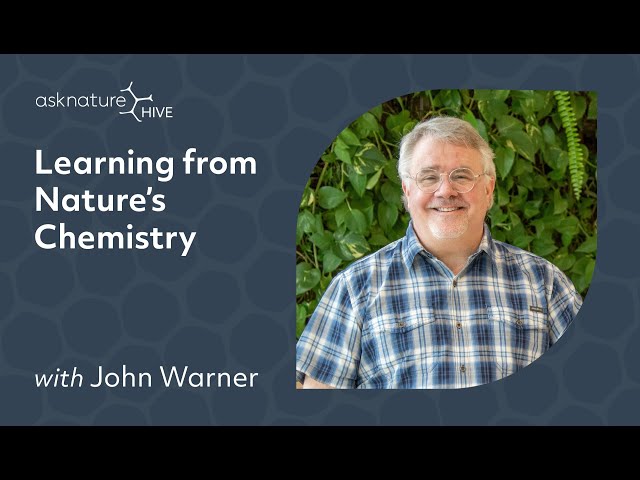
The latest AskNature Hive Live conversation featured John Warner, a renowned chemist and advocate for non-toxic, sustainable materials. He shared insights on how biomimicry principles can revolutionize chemical design, pioneering green chemistry practices that mimic nature to reduce environmental impact and promote health.
Explore biomimicry further at Biomimicry.org and AskNature.org. Join our nature-inspired community at AskNature Hive and follow us on social media: Instagram, Facebook, and LinkedIn.

Our latest Live Conversation featured Dr. Barbara Natterson-Horowitz, author of *Zoobiquity: The Astonishing Connection Between Human and Animal Health*. She shared profound insights on how nature's strategies, informed by evolutionary biology and animal behavior, can enhance human health, resilience, and well-being, bridging veterinary and human medicine.
Explore biomimicry further at [Biomimicry.org](https://biomimicry.org/) and [AskNature.org](https://asknature.org/). Join our nature-inspired community on the [AskNature Hive](https://asknaturehive.biomimicry.org). Connect with us on [Instagram](https://www.instagram.com/biomimicryinstitute/), [Facebook](https://www.facebook.com/biomimicryinstitute), and [LinkedIn](https://www.linkedin.com/company/biomimicryinstitute/). #nature #biomimicry #asknaturehive

The recent AskNature Hive Live Conversation with Erin Rovalo and Amanda Sturgeon explored biomimicry, biophilia, and the built environment. They discussed how nature-inspired design creates sustainable, health-promoting spaces.
Erin Rovalo, a PhD and Director of Education at the International Living Future Institute, also serves on The Biomimicry Institute Board. Amanda Sturgeon is CEO of The Biomimicry Institute, an award-winning architect and author.
Explore biomimicry at biomimicry.org and asknature.org, and join our community at asknaturehive.biomimicry.org. Follow us on social media: Instagram, Facebook, LinkedIn.

Missed the Ray of Hope Demo Day 2024? Watch the recording to see 10 nature-inspired startups present groundbreaking, biomimicry-powered solutions for pressing environmental challenges. Discover how these visionary companies are reimagining sustainability.
Hosted by the Ray of Hope Accelerator at The Biomimicry Institute, which supports high-impact startups with funding and mentorship, this recording offers inspiration for the future of nature-inspired innovation. Watch now.
Learn more about The Biomimicry Institute: biomimicry.org, asknature.org, asknaturehive.biomimicry.org. Connect with us on Instagram and LinkedIn.

Adelheid Fischer's AskNature Hive Live Conversation explored Biomimicry in National Parks, revealing how these awe-inspiring landscapes hold secrets to sustainable design and innovation.
Interested in joining the Hive? Explore for a month, on us! https://asknaturehive.biomimicry.org/offers/hueJ9Un9/checkout?coupon_code=ONEMONTHFREE
Learn more about the Biomimicry Institute and its initiatives: biomimicry.org, asknature.org, and asknaturehive.biomimicry.org. Connect with us on Instagram and LinkedIn.

Catheter-associated bloodstream infections (CRBSIs) cause millions of deaths annually due to biofilm. ACatechol (cohort 2023) developed a groundbreaking, bioinspired catheter, inspired by marine organisms, featuring a biofilm-repelling surface. Preclinical studies show over 40% infection reduction, potentially saving 2 million lives yearly and significantly reducing waste.
The Ray of Hope Accelerator (formerly Prize), honoring Ray C. Anderson, champions nature-inspired solutions for global environmental challenges. ACatechol was a 2022 finalist. The Accelerator continues to support nature-inspired startups. Learn more at AskNature.org, visit ACatechol, or explore the Biomimicry Institute.

Missed the Ray of Hope Accelerator info session? Catch the replay to learn about this six-month program supporting nature-inspired startups.
The session detailed funding opportunities, mentorship, expert sessions, and networking. It also explained the application process, eligibility, and selection criteria for innovators.
Apply for the accelerator: biomimicry.org/innovation/accelerator/apply/. Watch the replay for full details. For more about the organization, visit the Biomimicry Institute.

Discover "Maya Lessons From People, Plants, and the Sun" with medical anthropologist Dr. Monica Berger González. This conversation explores how Mayan medicine's holistic view of interconnected health—spanning people, animals, and the planet—offers insights for biomimicry, examining ancient traditions, modern expressions, and the future of global health.
Interested in biomimicry? Explore the AskNature Hive for a month on us: https://asknaturehive.biomimicry.org/. Learn more about the Biomimicry Institute at https://biomimicry.org/ and https://asknature.org/. Connect with us on LinkedIn and Instagram.

Join us as New York Times columnist Carl Zimmer discusses his book, AIR-BORNE. Drawing from extensive COVID-19 reporting, Zimmer reveals how the air teems with life—a trillion trillion bacteria cells are emitted annually, inspiring biomimicry. Explore the living atmosphere and its profound implications for design.
Interested in the Hive? Get a free month to explore: asknaturehive.biomimicry.org/offers/hueJ9Un9/checkout?coupon_code=ONEMONTHFREE. Learn more about the Institute: biomimicry.org | asknature.org | asknaturehive.biomimicry.org. Follow us: Instagram | LinkedIn.

```html
In "Plato and the Platypus: Biomimicry as a Philosophy," philosopher Henry Dicks explores biomimicry beyond a design tool, presenting it as a profound philosophy for living. This conversation delves into how biomimicry offers a framework for understanding humanity's relationship with nature.
Tune in to unpack biomimicry's philosophical roots, compare it to other worldviews, and reflect on its implications for us as designers, citizens, and humans navigating a changing world. Learn more at biomimicry.org, asknature.org, and asknaturehive.biomimicry.org.
Connect with us on social media: Instagram, LinkedIn, and Bluesky.
```
Biodiversity is the foundation of life, sustaining us in countless ways—from food and water to medicine and cultural inspiration. On World Biodiversity Day, we join the global movement to live in harmony with nature, building a future where both people and the planet can thrive.
Protecting this vital resource requires collective effort. We invite you to share what living in harmony with nature means to you, inspiring others with your commitments and actions. Learn more about biomimicry: biomimicry.org | asknature.org | asknaturehive.biomimicry.org

Celebrate 20 years of biomimicry! Join us for the replay of our 20th Anniversary Virtual Party, a joyful gathering rooted in connection and beauty. This special event highlights the evolving story of AskNature.org, the vision behind the Ray of Hope Accelerator, and heartfelt insights from co-founder Janine Benyus.
Whether you've been with us since the beginning or are new to biomimicry, this celebration is for you. Thank you for growing with us; let's continue designing with nature for a thriving future.
Explore more at the Biomimicry Institute, AskNature, and AskNature Hive. Connect with us on Instagram and LinkedIn.

GreenPod Labs, winner of the 2022 Ray of Hope Prize for their plant-pheromone-inspired produce protectors, doesn't rest on its laurels. Their initial innovation was just the beginning; they continuously seek inspiration from nature and other biomimetic innovators to drive new product development.
Discover their thriving biomimetic startup journey and success by watching the AskNature Hive Live Convo replay.
Learn more about biomimicry and connect with the community: biomimicry.org, asknature.org, biomimicry.org/community, Instagram, LinkedIn.

The Biomimicry Institute has announced ten startups for its 2025 Ray of Hope Accelerator, launching in September. These nature-inspired ventures will receive $15,000 in non-dilutive funding and over $50,000 in resources and mentorship to fast-track their market entry. The six-month program champions a Nature Positive future, expanding its global reach with participants from three continents, including first-time startups from Colombia and the Netherlands, and diverse leadership.
Founders will present their cutting-edge solutions at a special reception during New York Climate Week on Thursday, September 25, at Brickworks Design Studio. RSVP here: Luma link. The accelerator is supported by the Ray C. Anderson Foundation, Bentley Environmental Foundation, and L’Oréal. Learn more: biomimicry.org/innovation/accelerator.

Join the AskNature Hive for a conversation with Andrés Mitnik, CEO of Strong by Form. His company, a 2022 Ray of Hope Accelerator participant, developed Woodflow®, a patented technology that mimics tree growth. This process combines computational design with robotic manufacturing to create lightweight, structurally optimized wood-based composites for architecture, furniture, and mobility.
Andrés will provide a behind-the-scenes look at their design and production, highlight real-world applications, and share how biomimicry guides their success in developing smarter, sustainable solutions.
Learn more about biomimicry: biomimicry.org | asknature.org | biomimicry.org/community
Follow us: Instagram | LinkedIn
Environmental Scientist and Advocate
What EarthSayers stands for
Discover Diverse Voices on EarthSayers
Unlike algorithm-driven platforms that push you into a content bubble, we ensure you hear a variety of perspectives from scientists, activists, Indigenous leaders, business innovators, and everyday citizens working toward sustainability.
EarthSayers CINEMA
Watch, learn and lead—sustainability starts with you.
How to Live on Earth | Feature Documentary | Presented by Benedict Cumberbatch
What if the solutions to building a better future already exist? How to Live on Earth is an ambitious documentary that explores how humanity can create a thriving future by collaborating with nature. Presented by Benedict Cumberbatch, the film reveals the potential of teaming up with nature to address our greatest challenges.
Heartwarming and energizing, it offers a hopeful vision for a future where both nature and humanity can thrive. How to Live on Earth is produced by Open Planet Studios in association with Villars Institute Foundation and Silvania. Join the conversation by downloading film assets and sharing your reaction at howtoliveonearth.net/social-toolkit. Explore educational resources from the Villars Institute at YouTube.


