



Change the Way You Think by WWF
Our actions on a finite planet have a greater impact than we often realize. Daily choices, from personal habits to business practices, are interconnected in unexpected ways.
The health of business is directly linked to the natural world's well-being. Both can grow and flourish together.
This perspective comes from the World Wildlife Fund (WWF).
You might also like

Celebrated economic and social theorist Jeremy Rifkin (https://foet.org/about/jeremy-rifkin) will explain how the destructive "Age of Progress" is giving way to a nascent "Age of Resilience." This new meta-narrative transforms how humanity will live and flourish on a rewilding Earth. Crucially, we must understand that Earth is a water planet, not a land planet, with 91% of its surface covered by water.
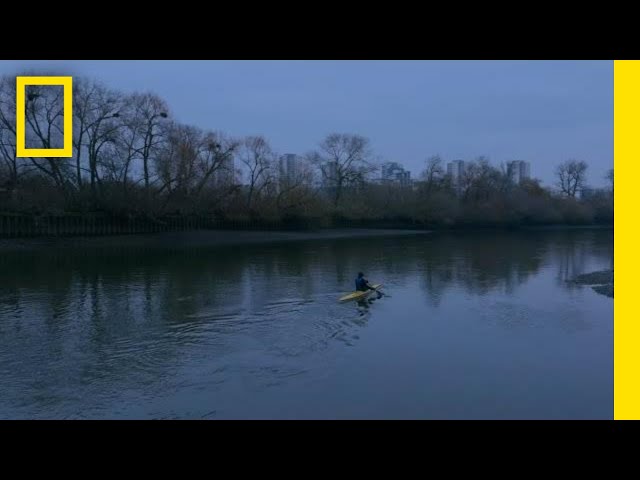
With only 0.5% of fresh water available, conservation is crucial. Learn how communities and simple daily actions can reduce water consumption, as highlighted by experts. (Paid content for Finish.) National Geographic brings you vital stories like 'The Worth of Water' video: https://youtu.be/aYNHNcmBxJM. Subscribe for more exploration: http://bit.ly/NatGeoSubscribe.

A creative pop-up store concept emerged in Australia, designed to challenge consumer perceptions. Its primary goal was to encourage reflection on the purchase of natural resources, such as bottled water. Information regarding this initiative was published on October 22, 2013.

Drip irrigation, while highly water-efficient for crops, prevents groundwater recharge. This observation comes from Faith Kearns, a scientist at the California Institute for Water Resources. The lack of groundwater replenishment raises a critical question: could this necessitate a return to less efficient methods, such as flood irrigation?
Environmental Scientist and Advocate

