



Native American North Dakota Access oil pipeline protesters: 'We refuse to be Trumped'
Native Americans fear the $3.7 billion Dakota Access Pipeline (DAPL), transporting crude oil from North Dakota to Illinois, threatens sacred lands and their Missouri River water supply.
At a camp near the Standing Rock Sioux reservation, protesters share their views on how Donald Trump's election might impact their campaign against the pipeline.
This report was published by The Guardian on November 14, 2016.
You might also like

Amidst numerous movements and tragedies, it's easy to feel overwhelmed. How do we stay accountable to our communities, question if "diversity" is enough, and avoid panic? This week, celebrated journalist and author Jeff Chang addresses these concerns. He offers a message of hope: we can navigate these challenges and be alright, provided we work together.
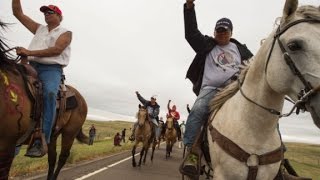
The Dakota Access oil pipeline generated considerable controversy in North Dakota. Published on September 9, 2016, this brief CNN review covers the core issues and related demonstrations.

On April 25th, 2017, Brenda White Bull, a lineal descendant of Lakota Chief Sitting Bull and Standing Rock Sioux Nation citizen, addressed the United Nations Permanent Forum on Indigenous Issues. She spoke powerfully about the state and personal violence perpetrated against Indigenous women and men during the Dakota Access pipeline resistance. This critical intervention, filmed and edited by @IndigenousWomenMedia,...

A revolution is unfolding at Standing Rock's Očhéthi Šakówiŋ camp, where over 200 indigenous American nations and 6,000 people have united in unprecedented solidarity. This movement, sparked by the fight against the Dakota Access Pipeline, aims to protect sacred water and assert tribal sovereignty against a colonialist state. In an era still celebrating Christopher Columbus, the indigenous rights movement is more ...
Environmental Scientist and Advocate

