



Tzeporah Berman of Greenpeace Discusses the Energy (R)evolution and Her Journey
Tzeporah Berman of Greenpeace describes the "Energy (R)evolution," asserting that current technology can dramatically reduce dirty energy. Her journey confirms this transition is not only possible and already underway but also affordable.
Berman concludes that stronger laws are essential to accelerate this shift towards sustainable energy.
You might also like

Oregon aimed for 25% renewable energy use by 2020, establishing itself as a global hub for solar manufacturing. SolarWorld in Hillsboro exemplifies this leadership. With over 2,700 employees, the company is recognized as one of the world's largest solar energy businesses.
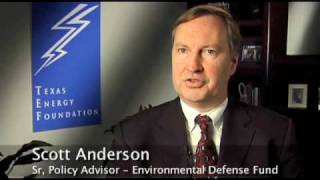
Scott Anderson, Senior Policy Advisor at the Environmental Defense Fund, is discussing Carbon Capture and Sequestration (CCS). His insights cover this crucial technology's role in environmental policy.

Christopher F. Jones's book redefines the fossil fuel revolution, focusing on advances in energy access—via canals, pipelines, and wires—rather than just production. He demonstrates how elaborate transportation networks for coal, oil, and electricity fueled remarkable urban and industrial growth in the American mid-Atlantic between 1820 and 1930, simultaneously setting the nation on a path toward fossil fuel depen...

David Keith reviews the science and technology of solar geoengineering, examining its potential to reduce climate risks, associated new risks, and current uncertainties. He proposes integrating solar geoengineering into a comprehensive 4D climate policy, which includes emissions cuts, carbon removal, and adaptation. A distinguished expert, David Keith is a Harvard Professor of Applied Physics and Public Policy. He...
Environmental Scientist and Advocate

