




Showing 20 search results of 5,119 videos found for

The American Southwest grapples with complex water issues, from prolonged drought to flash floods, prompting questions about water rights, equitable sharing, and diverse cultural perspectives.
Join the Natural History Institute for an in-person screening of the "Parched" documentary, featuring comments from curator Julie Comnick and producer Jane Marks. The film chronicles the creation of the "Parched: The Art of Water in the Southwest" exhibit.
This exhibit explores water complexities amid climate change and increasing demands. Nine regional artists, guided by scientists and advocates, spent a year creating original art pieces that reflect the conflicting demands on water for agriculture, recreation, households, and nature.

In October 1972, following public action, Congress passed the Marine Mammal Protection Act (MMPA). The first federal law of its kind, it aimed to protect marine mammals in U.S. waters, allowing them to recover and thrive.
The MMPA has since saved countless marine mammals from unregulated hunting and pollution. Yet, significant threats like climate change, fishing gear entanglement, and oil and gas development persist, underscoring the need for continued implementation and enforcement.
Join us through October to celebrate the MMPA's 50th anniversary. We'll share stories, host events, and provide opportunities for action. Help spread awareness by sharing our video with #MMPA50.

Discover the B Corp Certification process, a globally recognized standard for companies balancing profit and purpose. This certification signifies high standards of social and environmental performance, accountability, and transparency.
Ready to begin your journey? Learn how to get your company started with B Corp certification by visiting bcorporation.net for more information.

Plastic pollution worsens daily, with millions of tonnes entering our environment due to a "take-make-waste" economy. This harms nature, depletes resources, fuels climate and biodiversity crises, and wastes billions in valuable materials.
While companies have made voluntary efforts like reducing virgin plastic and piloting reuse, these actions lack the necessary scale. Plastic pollution is a global challenge, transcending borders, and requires a coordinated, globally aligned response.
We must urgently translate ambition into action. A legally-binding UN treaty on plastic pollution offers a permanent solution. This episode explores its potential, featuring insights from Eirik Lindebjerg (WWF) and Rolando Castro Cordoba (Costa Rica, MINAE).

CISL's Executive Director, Dr. Jake Reynolds, and Fellows Dr. Gabriel Okello and Dr. Dina Khalifa participate in the Prince of Wales's Global Sustainability Fellowship Programme. Their transdisciplinary research explores critical sustainability challenges.
The Programme fosters new transdisciplinary thinking, delivering practical insights, tools, and recommendations for decision-makers, alongside fundamental knowledge advancements. From 2022, it will be based at CISL’s new low-carbon, retrofitted building in Cambridge, creating a vibrant hub for collaborative research.
Find out more: Prince of Wales's Global Sustainability Fellowship Programme

Portland's Lan Su Chinese Garden, situated in the struggling Old Town corridor, faces significant challenges from the pandemic, a growing houseless crisis, and racism.
Executive Director Katherine Nye discussed these impacts on the garden during an interview on "The Story," which aired September 28, 2021.

The Northern White Rhinoceros is functionally extinct due to poaching, with only two individuals remaining. A video featuring Dr. Barbara Durrant explores whether the San Diego Zoo Safari Park's "frozen zoo" can reverse this. This unique biotech facility aims to use in vitro fertilization to implant a Northern White Rhino embryo into a closely related Southern White Rhino. If successful, this groundbreaking procedure could rescue critically endangered species and potentially resurrect extinct ones.
Originally created by Freethink, the full video is available on Big Think's YouTube channel. A transcript of the video can be read here.
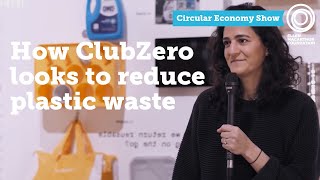
ClubZero's Safia Quereshi details how design innovation helps reduce plastic waste from London takeaways and food delivery. She also discusses the opportunities and challenges in scaling their solutions.
The Ellen MacArthur Foundation, a UK charity, champions a circular economy model that eliminates waste and pollution, circulates products, and regenerates nature. Explore their work and the circular economy further:
Subscribe to their YouTube channel, visit their website, and follow them on Instagram, Facebook, Twitter, and LinkedIn.

A luxury boutique now offers fish infused with fashionable microplastic fibers from the hottest brands.
This stark reality is highlighted by Just One Ocean.

Yueyue Wang shares her insights on the Master's in Sustainability Leadership program.
For more details, visit the Cambridge Institute for Sustainability Leadership (CISL) website.

Can large corporations, which have benefited from a linear economy, transition to a regenerative model while maintaining profits? Seb Egerton-Read explores this question with Bea Perez from Coca-Cola and Karrie Denniston from Walmart.
The Ellen MacArthur Foundation, a UK charity, champions a circular economy. This design-driven approach eliminates waste and pollution, circulates products and materials, and regenerates nature.
To learn more and stay connected, subscribe to our YouTube channel, visit our website, and follow us on Instagram, Facebook, Twitter, and LinkedIn.

Researchers from the Loango Chimpanzee Project have reported a novel discovery in Loango National Park, Gabon. They observed chimpanzees catching flying insects and applying them to their own wounds, as well as the wounds of other chimps.
This behavior may qualify as a form of self-medication. It could potentially prevent or reduce the harmful effects of pathogens and toxins, offering new insights into primate healing practices.

Many companies are prioritizing regenerative practices. Karrie Denniston from Walmart and Jim Andrew from PepsiCo discuss their practical steps in this area.
The Ellen MacArthur Foundation, a UK charity, promotes the circular economy. This design-driven model eliminates waste and pollution, circulates products and materials, and regenerates nature.
For more insights, subscribe to The Ellen MacArthur Foundation on YouTube. Explore our work and connect with us on social media via our website.

SustainablePR's Tony DeFazio interviews Adam Reed, founder of Tangleroot Farm, to discuss their Community Supported Agriculture (CSA) program.
This interview explores the sustainability benefits of local agriculture. It details how CSA, a farm share providing monthly certified organic produce to consumers and markets, strengthens local economies by shortening food supply chains.

Students are passionately advocating for the Healthy Future Students and Earth Act.
Listen as they share compelling reasons why this legislation is vital for a sustainable future.
After hearing their perspectives, contact your congressional representatives and urge them to support this critical bill.
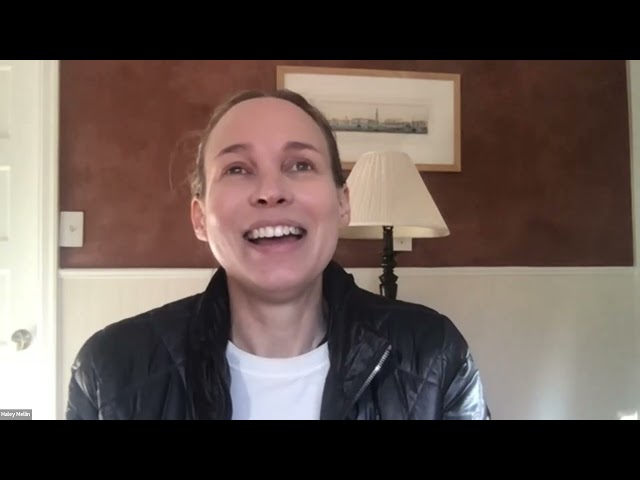
The Garrison Institute's first 2022 Pathways to Planetary Health (PPH) Forum, recorded on January 25, featured Dr. Haley Mellin (Art-to-Acres, Conserve.org) and Dr. Steven Brumby (Impact Observatory). Joined by co-founder Jonathan F.P. Rose, they discussed innovative large-scale conservation, biodiversity's role in planetary health, and visualization to support these goals.
The event focused on the "Half-Earth" pathway, which emphasizes conserving 50% of terrestrial and ocean areas by 2050 in biodiversity-rich zones and connecting corridors. This aims to stabilize life and climate, though it is one necessary component of planetary health, not singularly sufficient. Learn more about all four PPH pathways and events here.
Support the Garrison Institute's vital work here.

Over 150 organizations support the Ellen MacArthur Foundation's Extended Producer Responsibility (EPR) statement. Bea Perez from Coca-Cola and Pablo Costa from Unilever explain EPR's vital role in tackling plastic waste.
The Ellen MacArthur Foundation is a UK charity promoting a circular economy. This model, driven by design, eliminates waste and pollution, circulates products and materials, and regenerates nature.
Discover more about our work and the circular economy. Subscribe to our YouTube channel or visit our website. Follow us on Instagram, Facebook, Twitter, and LinkedIn.

Red wolves, like those found in North Carolina’s Alligator River National Wildlife Refuge, are among the world's most endangered carnivores. Relentlessly persecuted, they were declared extinct in the wild in 1980 after the last few were moved to a captive-breeding program.
Today, only eight wild red wolves are known to roam eastern North Carolina. The Center is actively working to save this critically endangered species. Learn more about red wolves here.

A new Oceana report reveals that the illegal seafood trade, partly fueled by U.S. demand, devastates fishing communities worldwide. Oceana advocates for expanded traceability and transparency requirements for all seafood imports.
Despite being the world's largest seafood importer, the U.S. Seafood Import Monitoring Program (SIMP) covers only 13 species, leaving 60% of imports vulnerable to illegal, unreported, and unregulated (IUU) fishing. This loophole allowed an estimated $2.4 billion in IUU seafood into the U.S. market in 2019, causing global economic and ecological damage.
Oceana urges President Biden to expand SIMP to include all imported seafood and implement comprehensive "net to plate" traceability to protect ocean health and livelihoods.
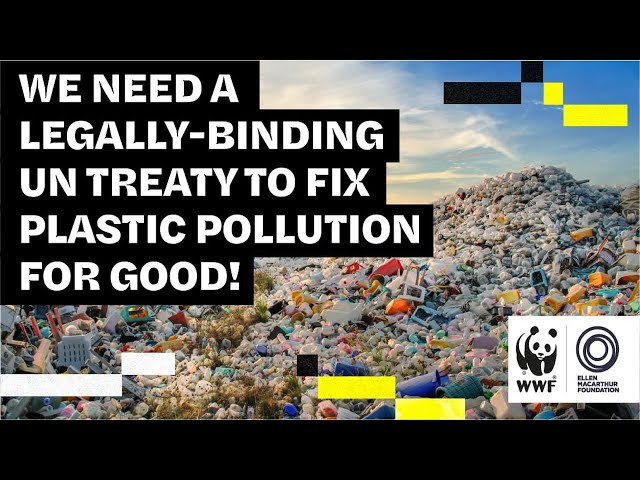
The Ellen MacArthur Foundation and WWF advocate for a legally-binding UN treaty to address the entire plastics lifecycle. This call is supported by over 2 million people, 700+ civil society groups, 70+ global companies, and more than three-quarters of UN member countries.
The escalating global plastic pollution crisis demands a coordinated, worldwide response, as voluntary measures are insufficient. World leaders have a critical opportunity in February at the United Nations Environmental Assembly (UNEA) to begin negotiations for this vital treaty. Governments must act now.
Learn more about this initiative: unplasticstreaty.org
Environmental Scientist and Advocate
What EarthSayers stands for
Discover Diverse Voices on EarthSayers
Unlike algorithm-driven platforms that push you into a content bubble, we ensure you hear a variety of perspectives from scientists, activists, Indigenous leaders, business innovators, and everyday citizens working toward sustainability.
EarthSayers CINEMA
Watch, learn and lead—sustainability starts with you.
The Thinking Game | Full documentary | Tribeca Film Festival official selection
“The Thinking Game” is the inside story of DeepMind's groundbreaking AI research, culminating in the Nobel Prize-winning AlphaFold breakthrough. Filmed over five years by the award-winning team behind "AlphaGo," this documentary explores co-founder Demis Hassabis's lifelong pursuit of artificial general intelligence and the rigorous scientific journey from mastering strategy games to solving the 50-year-old protein folding problem.
Following its world premiere at the Tribeca Festival, "The Thinking Game" is now available to watch for free. For those interested in hosting a screening for a classroom, community, or workplace, visit: rocofilms.com/films/the-thinking-game/.


