




Showing 20 search results of 5,119 videos found for

Join host Jeff Corwin on an adventure across central Florida, exploring the Silver and Ocklawaha Rivers, vital habitats for manatees. These gentle giants face severe threats, including habitat loss, dangerous cold snaps, and harmful algae blooms destroying their food sources. Tragically, manatee deaths are at an all-time high, impacting Florida's environmental integrity.
Conservationists, including Defenders of Wildlife, are racing to save this iconic species. A key solution involves restoring natural warm water habitats and removing man-made barriers like the Kirkpatrick Dam. A free-flowing Ocklawaha River would grant manatees access to essential warm springs, ensuring their survival and promoting coexistence with Florida's natural environment. Learn more at www.defenders.org/wildlifenation.

Jeff Corwin explores the Great Plains' interconnected species. He aids bison re-establishment with Native American tribes and conserves black-footed ferrets, once thought extinct. Ferrets critically depend on prairie dogs, a keystone species decimated by habitat loss and Sylvatic plague, nearly causing their extinction. The species was famously rediscovered by a dog named Shep.
Conservation efforts involve canine teams, like Melissa Steen and Tule, locating ferrets in prairie dog burrows. Spotlight teams, including Chamois Andersen, then find and trap ferrets at night. Biologists like Jessica Alexander collect vital data and administer life-saving vaccines against Sylvatic plague, ensuring this fragile population's survival.

Join host Jeff Corwin on an adventure across the Great Plains, exploring the vital connection between species. He assists Native American tribes in re-establishing bison herds, a keystone species that once shaped the ecosystem. Historically, bison were nearly wiped out by western expansion, devastating both the plains and tribal cultures that depended on them.
The loss of bison had ripple effects, impacting predators, scavengers, and species like black-footed ferrets. Conservationists, led by the Intertribal Buffalo Council, are working to restore at least ten large herds. This effort not only revitalizes the environment but also helps Native American communities reconnect with their cultural heritage, ensuring the survival of the Great Plains ecosystem.
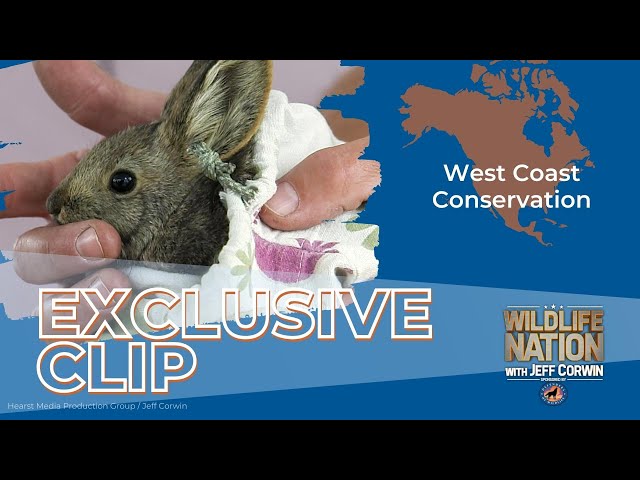
Join Jeff Corwin as he explores climate change impacts, from California's drought-stricken Sierra Nevada and the Caldor Fire's aftermath, where he meets firefighters, to Washington State. There, he highlights conservation efforts for the resourceful American beaver and the endangered Pygmy rabbit.
In Washington, Corwin joins the Tulalip Beaver Project, which humanely relocates beavers from conflict areas. Beavers are vital ecosystem engineers, building dams that increase water storage, filter pollutants, promote biodiversity, and create crucial salmon habitat. Nearly hunted to extinction, these resilient animals are now recovering, with the Tulalip Tribal Community leading successful wildlife management and research efforts.

Jeff Corwin joins conservationists in California to protect pinnipeds, including elephant seals and sea lions. Organizations like the Marine Mammal Care Center and Defenders of Wildlife are crucial in rescuing and rehabilitating these animals, which face severe threats from climate change, overfishing, habitat loss, and plastic pollution.
Corwin assists Dr. Lauren Palmer and Andy Johnson in rehabilitating four malnourished California sea lion pups, one of whom ingested plastic. After critical care, tagging, and weighing, the pups are successfully released back into the wild. This effort underscores the vital role of conservation in giving endangered animals a second chance and addressing environmental challenges for ecosystem health.

Join Jeff Corwin as he investigates critical mammal conservation challenges. He reveals that nearly a quarter of all mammals face extinction, with wild species comprising only 4% of global mammal biomass. Corwin focuses on New England's orphaned black bear cubs, increasingly threatened by habitat loss and human proximity.
At the Kilham Bear Center, caregivers like Ethan Kilham raise these cubs, mimicking a mother bear to ensure they remain wild. The aim is to prepare them for release at 18 months, minimizing human interaction. The program showcases the careful process of sedating, health-checking, and tagging cubs like Flower and Dover before their successful return to the wild.

Join Jeff Corwin on an Alaskan adventure to conserve North America's birds. He explores the Tongass National Forest, a vast old-growth temperate rainforest critical for species like the goshawk and vital for carbon sequestration. This unique ecosystem supports diverse wildlife, despite past logging impacts.
Corwin also visits the Alaska Raptor Center, where he helps rehabilitate and release a young bald eagle named Diesel. Rescued after being hit by a car, Diesel's recovery highlights the center's work in returning iconic raptors, including bald eagles and goshawks, to their natural habitat.

Reducing waste and pollution is vital for restoring nature and biodiversity. Flora Blathwayt from Notpla showcases how their seaweed packaging offers a suitable solution for removing everyday plastic waste from circulation.
The Ellen MacArthur Foundation, a UK charity, champions the idea of a circular economy. This design-driven approach eliminates waste and pollution, circulates products and materials, and regenerates nature.
Learn more about their work and connect online: Website | YouTube | Instagram | Facebook | Twitter | LinkedIn

Join us for a conversation with Patt Gunn, a Gullah Geechee historian, performer, and advocate from Underground TOURS of Savannah. She will discuss her work reconnecting her community with the water.
Support Patt's efforts by visiting her Facebook page: SLAVES IN THE CITY.


Brett Hartl, Government Affairs Director at the Center for Biological Diversity, built an artificial stream in his Arizona backyard. This vital watering hole supports wildlife like mountain lions, bobcats, bears, and deer, especially as drought and development reduce natural water sources. A video captures a mountain lion drinking from the stream.
The Center for Biological Diversity is a 501c3 nonprofit dedicated to protecting species and their habitats. Through science, law, and creative media, they work to secure a future where wild animals and plants thrive, recognizing the deep link between human welfare and nature's diversity.
Explore their work and take action: [Website](https://www.biologicaldiversity.org/), [Twitter](https://twitter.com/CenterForBioDiv), [Facebook](https://www.facebook.com/CenterforBioDiv/), [Instagram](https://www.instagram.com/centerforbiodiv/), [TikTok](https://www.tiktok.com/@centerforbiodiv/), [Action Alerts](https://www.biologicaldiversity.org/action/alerts/). For inquiries, email center@biologicaldiversity.org.
Alejandra Warren, a San Francisco-based sustainability consultant and intersectional environmentalist, co-founded Plastic Free Future in 2020. This non-profit organization is dedicated to reducing and eliminating plastic pollution.
Plastic Free Future achieves its mission by promoting reusable alternatives and focusing on education for systematically excluded communities. Support Alejandra's vital work at plastic-free-future.org.

At Summit 22, Materiom's Liz Corbin presented their work in driving nature regeneration and future innovations.
The Ellen MacArthur Foundation, a UK charity, develops and promotes the circular economy. This design-driven approach eliminates waste and pollution, circulates products and materials, and regenerates nature.
For more insightful videos, subscribe to our [YouTube channel](https://www.youtube.com/channel/UCQAC2otE5_agzHZPnk3mE5w?sub_confirmation=1). Learn more about our work on our [website](https://www.ellenmacarthurfoundation.org) or follow us on [Instagram](http://instagram.com/EllenMacArthurFoundation), [Facebook](http://www.facebook.com/ellenmacarthurfoundation), [Twitter](http://www.twitter.com/circulareconomy), and [LinkedIn](https://www.linkedin.com/company/ellen-macarthur-foundation/).

Justin Winters, co-founder of One Earth, and Jonathan F.P. Rose, co-founder of Garrison Institute, will discuss how humanity and nature can coexist and thrive together by 2050.
This July 20 discussion is the third in the Pathways to Planetary Health (PPH) Forum Summer 2022 series. It focuses on the "Half Earth" pathway, which emphasizes preserving biodiversity and natural ecosystems.
While Half Earth is a necessary component of planetary health, it is not singularly sufficient. Learn about all four pathways and other PPH events here.

Join Jeff Corwin on Wildlife Nation as he explores how climate change impacts North America's iconic creatures. Partnering with Defenders of Wildlife, Corwin investigates critical conservation challenges across the continent.
His journey begins in Florida, where he uncovers how warming beaches affect sea turtle development, leading to an imbalance in sex ratios. In California, Corwin examines the threats of drought and habitat loss on the giant garter snake. He then travels to Alaska to observe how bison and musk ox are adapting to a rapidly changing ecosystem.

Join host Jeff Corwin on "Wildlife Nation" for an epic mission to re-establish bison herds across North America. Traveling from the Canadian border to the Great Plains, Jeff partners with Native American tribes to bring these iconic animals back to their ancestral lands, learning how ancient herds once shaped the continent.
The adventure extends to Alaska's Kodiak Island, where the Allutiq people manage new bison populations. Teaming up with Defenders of Wildlife, Corwin showcases dedicated conservationists working to protect North America's magnificent creatures. This is a conservation journey like no other, inviting you to join the adventure.

Join Jeff Corwin on "Wildlife Nation" for an epic adventure to save North America's most imperiled species. He travels to Montana to protect black-footed ferrets, the continent's most endangered mammal, once believed extinct. Corwin also visits California's Big Sur to prepare mighty condors for the wild and Washington State to aid the world's tiniest rabbit, the pygmy rabbit, facing critical survival with only 150 individuals remaining.
This series celebrates animals rescued from the brink of extinction, showcasing the dedicated conservationists working to protect them and their ecosystems. Teaming with Defenders of Wildlife, Jeff Corwin invites you to join this vital adventure.

Join host Jeff Corwin in Alaska to explore the profound environmental challenge of climate change. He investigates the Mendenhall Glacier, rappelling into its crevasses and flying a drone above its edge to witness how warming temperatures are rapidly transforming this ancient ice. Experts note that ice loss here is occurring faster than anywhere else on Earth.
Corwin then examines the impact of melting glaciers on Alaska's vital salmon populations. Working with dedicated conservationists along the Montana River, he studies baby salmon. This research aids Alaska's Department of Fish and Wildlife in managing salmon populations and provides crucial insight into how climate change affects the entire ecosystem. This adventure is part of "Wildlife Nation," highlighting critical conservation efforts.

Join Jeff Corwin on "Wildlife Nation" for an avian adventure celebrating North America's incredible birds and the conservation heroes protecting them. The journey begins in Central California, witnessing wild California Condors soar. Next, travel to the Alaska Raptor Center to help a juvenile bald eagle return to the wild.
The adventure continues in Massachusetts, where efforts are made to save the unique salt marsh sparrow. You'll also see veterinarians protecting owls from harmful pesticides. Teaming up with Defenders of Wildlife, Jeff Corwin invites you to experience these feathered wonders and the dedicated work to preserve them.

Join host Jeff Corwin on "Wildlife Nation" as he explores the devastating effects of drought and the Caldor Fire in California's Sierra Nevada, meeting firefighters on the frontlines of climate change.
Corwin then travels to Washington State, partnering with conservationists to protect vital species like the resourceful American beaver and the endangered Pygmy rabbit, working to safeguard their ecosystems.
Discover more about these amazing animals and conservation efforts. Check local listings for showtimes or visit defenders.org/wildlifenation to learn more.
Environmental Scientist and Advocate
What EarthSayers stands for
Discover Diverse Voices on EarthSayers
Unlike algorithm-driven platforms that push you into a content bubble, we ensure you hear a variety of perspectives from scientists, activists, Indigenous leaders, business innovators, and everyday citizens working toward sustainability.
EarthSayers CINEMA
Watch, learn and lead—sustainability starts with you.
The Thinking Game | Full documentary | Tribeca Film Festival official selection
“The Thinking Game” is the inside story of DeepMind's groundbreaking AI research, culminating in the Nobel Prize-winning AlphaFold breakthrough. Filmed over five years by the award-winning team behind "AlphaGo," this documentary explores co-founder Demis Hassabis's lifelong pursuit of artificial general intelligence and the rigorous scientific journey from mastering strategy games to solving the 50-year-old protein folding problem.
Following its world premiere at the Tribeca Festival, "The Thinking Game" is now available to watch for free. For those interested in hosting a screening for a classroom, community, or workplace, visit: rocofilms.com/films/the-thinking-game/.


