



A Case for Integrating Solar Geoengineering into Climate Policy | David Keith | Talks at Google
Talks at Google
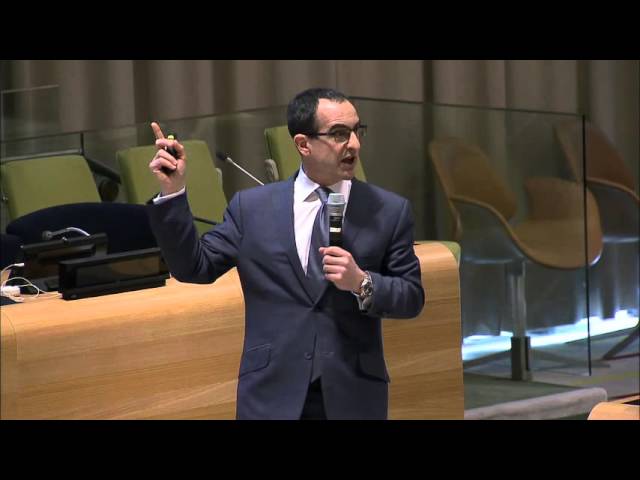
David Keith reviews the science and technology of solar geoengineering, examining its potential to reduce climate risks, associated new risks, and current uncertainties. He proposes integrating solar geoengineering into a comprehensive 4D climate policy, which includes emissions cuts, carbon removal, and adaptation.
A distinguished expert, David Keith is a Harvard Professor of Applied Physics and Public Policy. He founded Carbon Engineering, a company developing technology to capture CO2 for carbon-neutral fuels. Best known for his work on solar geoengineering, he led Harvard's Solar Geoengineering Research Program. He has authored over 200 academic publications and "A Case for Climate Engineering."
The session was moderated by Greg Bronevetsky.
You might also like

Anti-nuclear activist Dr. Helen Caldicott discusses renewable energy as an alternative to nuclear power. This content is excerpted from her talk at The Sanctuary for Independent Media in Troy, NY, on November 13, 2010. Learn more about Dr. Caldicott at helencaldicott.com. The original material was uploaded on November 29, 2010.

Tzeporah Berman of Greenpeace describes the "Energy (R)evolution," asserting that current technology can dramatically reduce dirty energy. Her journey confirms this transition is not only possible and already underway but also affordable. Berman concludes that stronger laws are essential to accelerate this shift towards sustainable energy.
Ceres and Bloomberg New Energy Finance (BNEF) released "Mapping the Gap: The Road from Paris," a report exploring how to finance the global clean energy transition. Michael Liebreich (BNEF) presented its findings at the 2016 Investor Summit on Climate Risk at the U.N. headquarters in NYC. The report reveals a significant $12.1 trillion global renewable energy investment opportunity in the electric sector over the ...

Small islands often depend on expensive imported fuel for electricity. In Cape Verde, the public-private partnership Caboélica harnesses plentiful winds, reducing diesel imports and boosting energy security. Caboélica is an Ashden Award winner. Ashden promotes practical, local energy solutions that cut carbon, protect the environment, reduce poverty, and improve lives.
Environmental Scientist and Advocate

