



FAO MRV dashboard: tracking forest emission reductions for climate action
United Nations Food and Agricultural organization
The Measurement, Reporting and Verification (MRV) dashboard offers insights into countries’ forest reference level submissions to the UNFCCC and the assessed emission reductions. It also summarizes emission reductions reported under jurisdictional REDD+ schemes, showcasing the progress in transparent forest monitoring and reporting for climate action.
Explore the MRV Dashboard here. Learn more about Forest Monitoring and AIM4Forests. Subscribe to our channel here and follow FAO on social media: Facebook, Instagram, LinkedIn, TikTok, X, Weibo.
You might also like
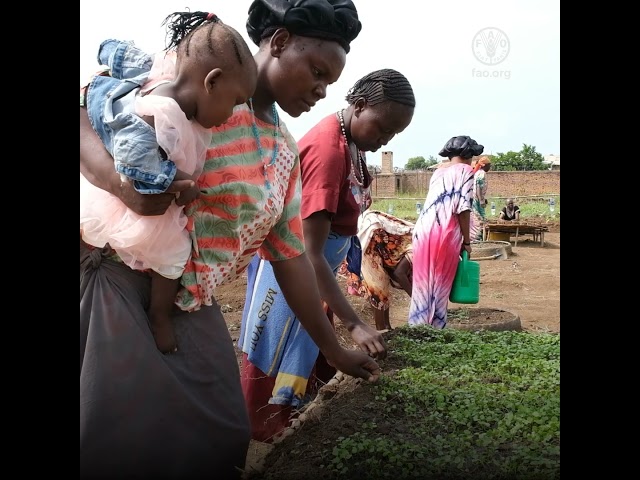
In South Sudan, FAO leads a program empowering women in agrifood systems. Farmers and small business owners receive tailored support, including training in vegetable production and irrigation, seeds, tools, and small ruminants to improve nutrition for families with young children. Savings and loans associations are also established to boost economic empowerment. FAO will highlight women's innovative contributions ...

Antimicrobial Resistance (AMR) is a critical threat, driven by the overuse and misuse of antimicrobials in human medicine and agriculture. This jeopardizes our food supply and leads to the failure of vital treatments, leaving farmers struggling to manage animal health effectively. To combat this, the Food and Agriculture Organization (FAO), World Health Organization (WHO), and World Organisation for Animal Health ...

On South Korea’s Jeju Island, generations of women, known as haenyeo, free-dive on a single breath to harvest shellfish and seaweed. This thousand-year-old tradition embodies strength, skill, and sustainability. In 2023, FAO recognized the Jeju Haenyeo Fisheries System as a Globally Important Agricultural Heritage System. Explore the GIAHS: https://www.fao.org/giahs/en. Subscribe to FAO on YouTube: http://www.yout...

The GIES, a scientific tool developed by IGSNRR/CAS, identifies, assesses, and monitors the environmental sustainability of geographical areas producing Special Agricultural Products (SAPs). Its methodology establishes traceability for SAPs linked to unique geographical features, benefiting consumers, products, and their cultivation environment. Applying GIES within the OCOP initiative enhances the recognition, va...
Environmental Scientist and Advocate

